Who Will Lead the NCAA March Madness Charge in 2027?
7 September 2026
The calendar still says we are a full cycle away from the 2027 NCAA Tournament, but the groundwork for that championship run is already being laid in gyms across the country. Recruiting classes are signed, rosters are being reshaped through the transfer portal, and coaching staffs are making calculated bets on which freshmen will become sophomores, which sophomores will become stars, and which transfers will finally unlock a program's potential.
Predicting a champion this far out is a fool's errand if you are looking for certainty. But identifying the programs, the players, and the structural advantages that will shape the race is not only possible, it is essential for anyone who wants to understand college basketball's evolving power dynamics. The 2027 tournament will be defined by continuity, by the maturation of the 2025 freshman class, and by how well programs adapt to a landscape where the transfer portal and NIL collectives have rewritten the rules of roster construction.

The Structural Shift That Changes Everything
Before we talk about specific teams, we have to talk about the environment they operate in. The 2027 tournament will be the first where the current freshman class has had two full years in a program's system. That matters more now than it did a decade ago. In the old model, elite freshmen were one-and-done, and the tournament was often decided by which team had the most talented collection of teenagers. That era is over. The combination of NIL money, the transfer portal, and the extra year of eligibility granted during the pandemic has created a different kind of roster arithmetic.The most successful programs in 2027 will not be the ones with the highest recruiting rankings. They will be the ones that have managed to keep a core group of players together for two or three seasons. Chemistry, defensive communication, and late-game execution are all products of time spent together. You cannot buy that in the portal, and you cannot fast-track it with talent alone. The teams that figure out how to develop players internally while selectively using the portal will have a massive edge over programs that treat every offseason like a complete roster overhaul.
Think about what happened in recent tournaments. The teams that made deep runs were often the ones with veteran guards who had played together for multiple years. That trend is not going to reverse itself. If anything, it is going to accelerate. By 2027, the most dangerous teams will be the ones whose current freshmen have become juniors, whose sophomores have become seniors, and whose coaching staffs have had three full years to install their systems.

The 2025 Freshman Class: The Future Is Already Here
The players who signed in November 2024 and arrived on campus in the fall of 2025 will be juniors by the time the 2027 tournament rolls around. That is the most important recruiting class in recent memory because it represents the first full cycle of the new transfer portal era. These players made their college decisions knowing they had options. They could have gone to any program in the country, and many of them chose schools based on NIL packages, playing time projections, and coaching stability rather than just tradition or conference affiliation.That has created a fascinating dynamic. The traditional blue bloods are still going to be relevant, but they are no longer the automatic destination for every top-50 prospect. A player who might have gone to Duke or Kentucky in 2015 is now just as likely to pick a program like Alabama, Houston, or even a mid-major with a strong NIL collective and a clear development path.
The 2027 tournament will be the first one where the impact of this shift is fully visible. The juniors who were freshmen in 2025 will have had two full seasons of college basketball under their belts. They will have faced elite competition, learned how to handle the grind of a conference schedule, and developed the kind of physical maturity that separates college stars from high school phenoms. The question is which programs have done the best job of nurturing that development.

The Coaching Carousel Factor
Coaching stability is going to be one of the most undervalued predictors of 2027 success. Look at the programs that have consistently made deep tournament runs over the past decade. They all have one thing in common: they have not changed head coaches. The same names have been on the sidelines for years, and that continuity has allowed them to build sustained recruiting pipelines and player development systems.By contrast, programs that change coaches every three or four years are perpetually starting over. They lose recruits, they lose transfers, and they lose the institutional knowledge that makes a program greater than the sum of its parts. The 2027 tournament will be won by a coach who has been at his school for at least five years, probably longer. That rules out anyone who took a new job in 2024 or 2025, unless they are an absolute miracle worker.
The coaching carousel has also created an interesting dynamic in the transfer portal. When a coach leaves, players are almost always granted immediate eligibility to transfer. That means a coaching change in 2025 or 2026 could decimate a roster that was otherwise positioned for a deep run in 2027. The programs that avoid that disruption, or that manage to retain their core players through a coaching transition, will have a significant advantage.

The Leading Contenders: A Deep Dive
Now we get to the fun part. Which programs are actually positioned to cut down the nets in 2027? This is not about predicting a bracket. It is about identifying the structural advantages, the returning talent, and the recruiting momentum that will put certain teams in the conversation.Houston: The Blueprint for Sustained Success
If you want to know what a 2027 contender looks like, start with Houston. The Cougars have become the gold standard for program building in the modern era. They do not rely on one-and-done talent. They recruit players who fit their system, develop them over multiple seasons, and play a brand of basketball that translates perfectly to the tournament. Their defensive intensity, rebounding, and physicality are constants. They do not have bad nights on the glass, and they do not let opponents get comfortable.The key to Houston's 2027 prospects is the development arc of their current roster. The players who are freshmen and sophomores now will be the core of the 2027 team. Coach Kelvin Sampson has proven that he can take unheralded recruits and turn them into All-Conference players by their junior and senior years. That is exactly the timeline we are looking at. If Houston can keep its current young core together, and if Sampson is still on the sidelines, they will be one of the favorites.
The trade-off for Houston is that their style of play is physically demanding. They play so hard on defense that they can sometimes wear down over the course of a season. But that is a manageable problem. The bigger concern is whether they can generate enough offense in the half court against elite defenses. That has been their Achilles heel in recent tournaments. If the 2027 roster includes a guard who can create his own shot in the final five minutes of a game, Houston will be nearly impossible to beat.
Duke: The Talent Machine Recalibrates
Duke is always going to be in the conversation because of the recruiting machine that Coach Jon Scheyer has maintained. The Blue Devils consistently bring in top-five classes, and they have the brand name and NIL infrastructure to compete with anyone. But the question for 2027 is whether Duke can finally break the pattern of relying too heavily on freshmen.The tournament is unforgiving to young teams. Freshmen make mistakes in March. They get rattled by the pressure, they struggle with the physicality of the tournament, and they often do not have the emotional maturity to handle a bad shooting night. Duke has had several recent tournament exits that followed this exact script. The 2027 team will be different if Scheyer can convince some of his top players to stay for a second or third year.
The blueprint is right there. If the freshmen who arrive in 2025 are good enough to play significant minutes as freshmen, they will be elite by their junior year. The question is whether they will still be at Duke. The transfer portal is a constant threat. A player who is projected as a second-round pick might decide to transfer to a smaller program where he can be the focal point of the offense and improve his draft stock. Duke has to fight that battle every offseason.
The advantage Duke has is the quality of its development staff. Scheyer has surrounded himself with former players and elite assistants who know what it takes to succeed at the highest level. The facilities are world-class, the academic support is excellent, and the exposure is unmatched. For a player who wants to be a top-five pick, Duke is still the best place to be. For a player who wants to win a national championship, Duke is a great choice, but only if the roster has the right mix of youth and experience.
Alabama: The New-Age Powerhouse
Alabama has completely changed the conversation about what is possible in college basketball. The football school has become a basketball powerhouse, and they have done it by embracing the modern game. They play fast, they shoot a lot of threes, and they recruit players who fit that style. The program has also become a destination for transfers who want to showcase their skills in a system that maximizes their potential.The 2027 Alabama team will be built around the players who are currently freshmen and sophomores. The Crimson Tide have recruited well, and they have the NIL resources to keep their best players from leaving. The key is whether Coach Nate Oats can maintain his offensive system while also improving the defensive consistency that has sometimes been lacking in tournament play. Alabama can score with anyone, but they have had games where they could not get a stop when they needed one.
The advantage Alabama has is the style of play. The tournament is won by teams that can adapt to different tempos. Alabama can run with anyone, but they have shown that they can also slow things down and execute in the half court when necessary. The question is whether the 2027 roster will have the veteran leadership to make those adjustments on the fly. If the current young players develop into reliable decision-makers, Alabama will be a legitimate title threat.
UConn: The Program That Refused to Go Away
UConn has re-established itself as one of the premier programs in the country. The back-to-back championships in 2023 and 2024 were not a fluke. They were the result of a coaching staff that understands how to build a tournament-ready roster. The Huskies play a beautiful brand of basketball on offense, with excellent ball movement and spacing, and they are tough enough defensively to win ugly games when they have to.The 2027 team will depend on how well Coach Dan Hurley can continue to reload. UConn has become a destination for players who want to be developed for the NBA. They have a proven track record of sending players to the league, and that is a powerful recruiting tool. The question is whether they can maintain their momentum through the inevitable roster turnover.
The one concern for UConn is the physical toll of their style of play. Hurley demands a lot from his players, and the season is long. By March, some UConn teams have looked tired. That is a manageable issue if the roster has enough depth. The Huskies have recruited well, and they have shown that they can develop players who were not highly ranked coming out of high school. If that trend continues, UConn will be in the mix.
Gonzaga: The Eternal Contender
Gonzaga is the program that refuses to be ignored. They do not have the recruiting rankings of Duke or Kentucky, but they have something more valuable: a system that works. The Bulldogs have been a top seed in the tournament more times than almost anyone over the past two decades, and they have come agonizingly close to winning it all. The 2027 tournament might finally be the year they get over the hump.The key for Gonzaga is the international pipeline. They have built a reputation for finding and developing players from overseas who are overlooked by the traditional powers. That gives them a unique talent pool. International players often stay in college longer than their American counterparts, which means they are more experienced by the time they reach their junior and senior years. That is exactly the kind of player who thrives in the tournament.
The challenge for Gonzaga is the competition in the West Coast Conference. They do not face the same level of nightly competition as teams in the Big 12 or the SEC. That can be a disadvantage in March when they suddenly face elite athleticism and length. But Gonzaga has proven time and again that they can compete with anyone. The 2027 team will be experienced, well-coached, and hungry. That is a dangerous combination.
The Dark Horses and Sleeper Picks
It is impossible to talk about 2027 without acknowledging that the tournament is defined by upsets. Every year, a team that was not on anyone's radar makes a deep run. The 2027 version of that team is probably playing right now, building chemistry and developing players without anyone paying attention.The Mid-Major That Stays Together
The most likely dark horse is a mid-major program that has a core group of players who have been together for three years. These teams do not have the raw talent of the power conference schools, but they have something that is often more valuable in March: continuity. They know each other's tendencies, they trust each other in crucial moments, and they are not going to be intimidated by the bright lights.Saint Mary's, San Diego State, and Creighton have all shown that this model can work. The key is finding a program that has not been raided by the transfer portal. That is harder than it used to be. Any player who has a breakout season at a mid-major is going to get offers from power conference schools. The programs that survive this process are the ones that can offer their players something more than money: a chance to be the hero of a Cinderella story.
The Transfer Portal Team
There is another kind of dark horse that is becoming more common: the team that is assembled entirely through the transfer portal. A coach can take five or six transfers who were all starters at their previous schools, convince them to buy into a system, and create a team that is more talented than any recruiting class could provide. The challenge is chemistry. Transfers often struggle to mesh with each other because they have not played together before.The teams that succeed with this model are the ones that prioritize fit over raw talent. They bring in players who are willing to sacrifice individual stats for team success. That is rare in the transfer portal, where players are usually looking for a bigger role, not a smaller one. But when it works, it can be devastating. A team of veterans who have all been through the tournament before is not going to be rattled by anything.
Common Mistakes in Predicting the Tournament
If you want to be smart about the 2027 tournament, you need to avoid the mistakes that casual fans and even some analysts make every year.The first mistake is overvaluing recruiting rankings. A team with five top-50 recruits is not automatically better than a team with three top-100 recruits who have been in the system for two years. The tournament rewards experience, not potential. The teams that win are the ones that execute under pressure, and execution is a product of repetition and trust.
The second mistake is undervaluing the importance of guard play. The tournament is won by teams with elite point guards. A dominant big man is nice, but he cannot create his own shot in the half court the way a guard can. The teams that make deep runs almost always have a guard who can break down a defense and make the right decision in the final minutes.
The third mistake is ignoring the injury factor. The 2027 tournament could be decided by which team stays healthiest. A key injury in February or early March can derail a season. The teams that have depth are the ones that can absorb an injury and keep playing at a high level. That is another reason why continuity matters. A team that has been playing together for three years has players who can step into different roles without missing a beat.
The Intangibles That Matter Most
There are certain qualities that cannot be measured by statistics or recruiting rankings. The 2027 champion will have them, and the teams that fall short will not.The first intangible is mental toughness. The tournament is a grind. You have to play your best basketball on consecutive nights, often against teams that are playing the game of their lives. The teams that win are the ones that do not get rattled by a bad call, a cold shooting streak, or a hostile crowd. They stay focused on the next possession, and they trust their preparation.
The second intangible is leadership. Every championship team has a player or two who sets the tone. They are the ones who call the team meeting after a bad loss, who hold their teammates accountable in practice, and who step up when the game is on the line. That kind of leadership can only come from experience. The teams that have been through the tournament before are the ones that know how to handle the pressure.
The third intangible is luck. The tournament is a single-elimination format, and sometimes the ball bounces the wrong way. A team can do everything right and still lose because an opponent makes an impossible shot at the buzzer. The teams that win are the ones that put themselves in a position to be lucky. They do not give away games with turnovers and mental mistakes. They make their opponent earn every point, and they give themselves a chance to win in the final minutes.
The Verdict: What to Watch For
So who will lead the NCAA March Madness charge in 2027? The answer is not a single team. It is a collection of programs that have positioned themselves for sustained success. Houston has the system and the coach. Duke has the talent and the brand. Alabama has the style and the resources. UConn has the recent pedigree and the development track record. Gonzaga has the consistency and the international pipeline.But the actual champion will be the team that best combines all the factors we have discussed. They will have a veteran core that has played together for multiple seasons. They will have elite guard play. They will have a coach who has been at the school long enough to have built a complete program. They will have avoided the injury bug, and they will have gotten a few lucky bounces along the way.
The 2027 tournament is not going to be won by the team with the most talent on paper. It is going to be won by the team that has done the hard work of building something lasting. The players who are freshmen right now are going to be the leaders of that team. The question is which program has given them the best chance to succeed.
Start paying attention to the rosters now. Watch how the freshmen develop over the next two years. Pay attention to which programs are keeping their players out of the transfer portal. Watch which coaches are building relationships that go beyond the basketball court. The answers to those questions will tell you who is going to be cutting down the nets in April 2027.
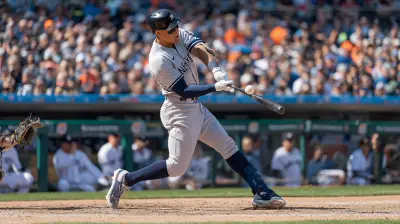
all images in this post were generated using AI tools
Category:
Season ExpectationsAuthor:

Preston Wilkins
Discussion
rate this article
2 comments
Carmel Kim
Exciting times ahead for March Madness! The competition is fierce, and I can't wait to see which team rises to the challenge in 2027.
September 12, 2026 at 3:27 AM
Hadley McCall
As the countdown to 2027 begins, whispers of untapped talent swirl in the air. Which under-the-radar recruits will emerge from the shadows to challenge the giants and redefine March Madness? The game is changing...
September 9, 2026 at 7:19 AM