Why Timing is Everything in Scoring
22 May 2026
If you've ever watched a last-minute header win a soccer match or a buzzer-beater three-pointer flip the outcome of an NBA game, you’ve felt it—timing is everything when it comes to scoring. You can be the most talented athlete in the world with the best skills and strongest stats, but if you don’t know when to strike, all that ability might never truly shine.
Timing in sports isn't just about seconds ticking off a clock; it’s about sensing the moment. It's about reading the flow, understanding your opponent, and knowing exactly when to make your move. Scoring is not just about force—it's about finesse. And nothing defines finesse better than perfect timing.
So, let’s dive deep—like, locker room heart-to-heart deep—and talk about why timing is everything in scoring.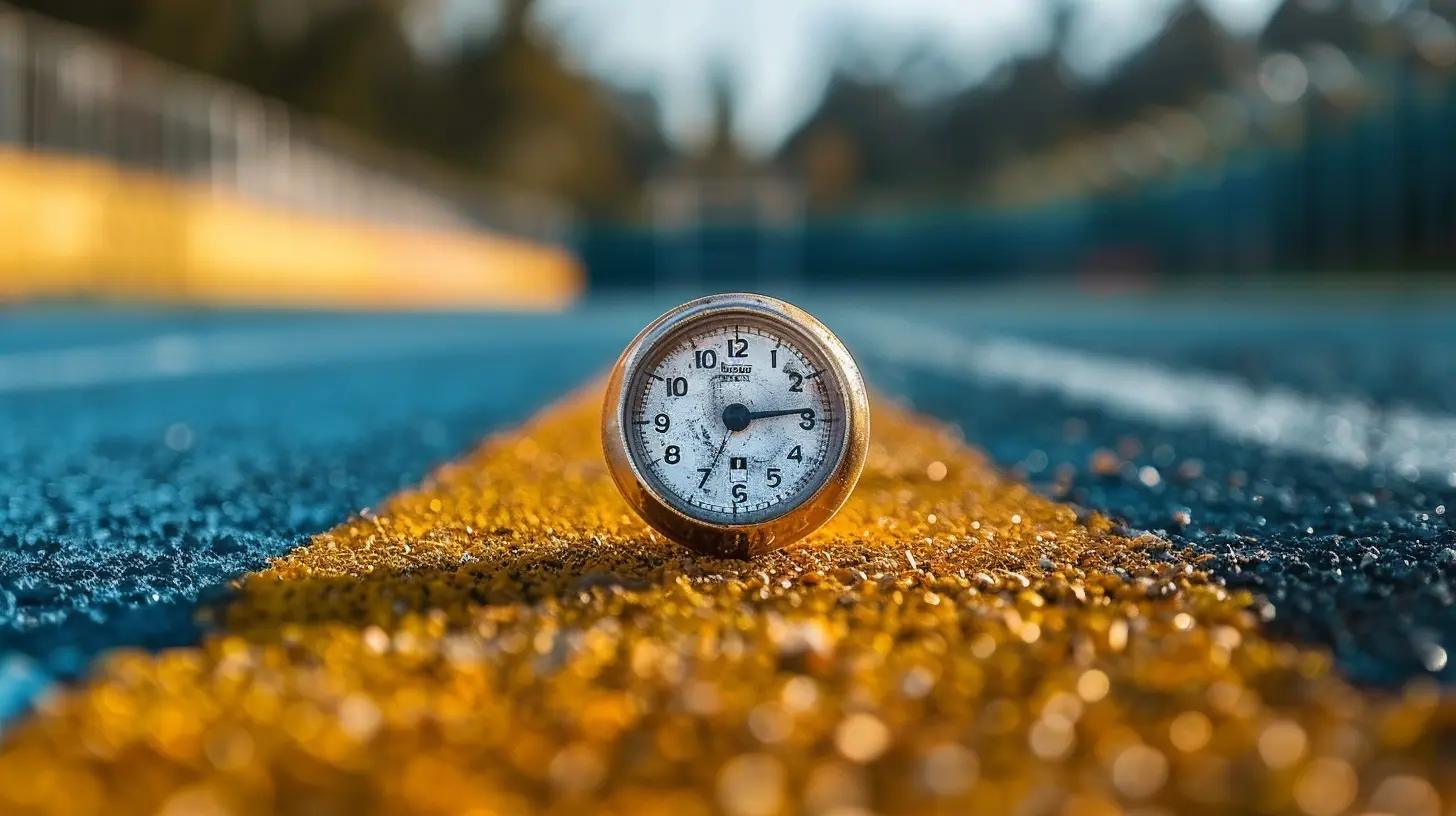
The Heartbeat of the Game: Understanding Timing
Have you ever tried to tell a joke and delivered the punchline just a little too early or a tad too late? It falls flat, right? Same goes for sports. The magic isn't just in what you do—it's when you do it. Timing brings rhythm to the game. It’s the heartbeat that turns chaos into choreography.Whether you're a point guard dishing a no-look pass or a striker waiting for the keeper to lean the wrong way—it's all about that perfect instant.
Timing: The Invisible Skill
You can't measure it with a stopwatch or capture it in an Instagram highlight reel. It’s more instinct than instruction, more art than arithmetic. Timing often separates the good from the great. Think about it:- Michael Jordan waited until the perfect moment to rise for a game-winning jumper.
- Lionel Messi often hesitates just long enough to drag defenders toward him before slotting a pass.
- Tom Brady doesn’t just throw the ball; he throws it to where his receiver will be in a second.
These athletes mastered the clock—not by watching it, but by feeling it.
What Makes Timing So Crucial in Scoring?
Let’s break it down. Why is timing such a game-changer in sports, especially in scoring situations?1. It Catches Opponents Off Guard
Predictability is the enemy of scoring. If your defender knows when you'll shoot, you're already a step behind. Great scorers use timing to disrupt patterns, making every move feel unexpected.Think of Steph Curry—he doesn’t just shoot deep. He waits for just the right micro-moment when the defender’s feet shift or an eye glance gives away hesitation. Then—bang!
2. It Maximizes Efficiency
You don’t need 20 shots to score if your timing is on point. In soccer, one perfectly timed run behind the backline can create a goal without a single touch until the finish. In baseball, a well-timed swing can turn a fastball into a home run.Timing lets athletes do more with less.
3. It Takes Advantage of Momentum
Momentum is a real beast in sports. You’ve felt it. Your team’s pressing, the crowd’s buzzing, adrenaline’s pumping. The right timing lets you ride this wave instead of crashing against it.Score when the crowd's on its feet? That’s not coincidence. That’s capitalizing on timing.
The Difference Between Speed and Timing
Speed is about doing things fast. Timing? It’s about doing the right thing at the right moment.Let’s use a simple analogy: Say you're at a stoplight. It turns green. If you hit the gas pedal too fast, you might rear-end the guy in front of you. If you're too slow, the guy behind starts honking.
Perfect timing? That’s you gliding through that light at just the right second—smooth, effortless, efficient.
Same principle in sports. A fast player might blow past the defense too early and end up offside. But a timed run? That’s a clean breakaway and a strong chance to score.
Scoring In Different Sports: Timing in Action
Let’s take a closer look at how timing shows up in different sports. Because even though the games are different, the principle remains rock-solid.⛹️ Basketball: The Buzzer Beater and Beyond
In basketball, timing is everything—literally. The shot clock, game clock, and the defensive rotations all demand split-second decisions. But think about this:- Waiting for the defender to commit before making a move.
- Timing your shot release so it arcs just before the block.
- Positioning for a rebound just as the ball hits the rim.
Every point involves a dance with time.
⚽ Soccer: Timing the Final Touch
In soccer, you often hear about “timing the run.” It’s not enough to be fast or strong—you’ve got to be sneaky-smart.- A striker who breaks too early? Offside.
- Too late? Defender catches him.
- Just right? He’s clean through on goal.
Then, there's the issue of when to shoot. Delay a shot by even half a second, and the angle disappears. Take it too early, and it becomes predictable.
Timing, folks.
? Football: Quarterback Vision and Timing Routes
Ask any NFL quarterback: the difference between a touchdown and an interception can be timing. They don’t throw to where the receiver is. They throw to where the receiver will be.Wide receivers run “timing routes.” They’re trained to be at specific spots at specific times. Miss the beat, and the play breaks down.
There’s also the timing of the snap itself—too early or too late, and the defense eats you up.
⚾ Baseball: Swing Timing = Base Hits
In baseball, timing the swing is about syncing your internal clock with the pitcher’s rhythm. A 95 mph fastball? You've got milliseconds to decide whether to swing.A late swing? Strike.
An early one? Weak pop-up.
Perfect timing? That ball’s flying into the stands.
Timing literally determines whether you get on base or sit back down.
The Psychology Behind Timing
You might be asking, "Is timing just practice? Or is it psychological too?" And the answer is: both.Mental Toughness
To time things right, especially under pressure, you need a calm mind. Remember those last-second plays? The greats slow things down mentally even when the crowd’s roaring.That’s not just talent—it’s composure.
Game IQ
Knowing when to pass, shoot, or hold the ball? That’s game intelligence. It comes from experience, film study, and just playing the game over and over again. The smartest players aren't always the flashiest, but they know exactly when to pounce.Confidence
Hesitate, and the moment passes. Being confident in your ability to act at the right time is what allows scorers to pull the trigger when it matters.Training to Improve Timing
Good news: Even if you weren’t born with surgical timing, you can improve it.1. Watch Tape
Study the greats. Watch how they wait, how they react, how they deceive. Look at when—not just how—they score.2. Simulate Pressure Situations
Don’t just practice shots. Practice when to take those shots. Create scenarios where you’ve got limited time or space to execute.3. Play More Games
Game reps beat practice reps. The more you play, the more you develop feel. You can’t teach instinct, but you can nurture it.4. Work on Reaction Time
Quick decisions come from sharp reactions. Games like tennis, racquetball, or even video games (yes, seriously) can help you train your brain to respond faster.Timing in Life = Timing in Sports
Here's a little truth bomb: The lessons in sports often mirror life. Scoring a goal or hitting a game-winner isn’t just about being good—it’s about being ready when your moment arrives.Same with life.
- That job interview? Nailing your pitch at exactly the right time.
- That conversation with a loved one? Choosing your words at the exact right moment.
Timing isn’t just a sports skill—it’s a life skill.
Final Whistle: Timing is the Unseen MVP
When the bright lights shine and the pressure mounts, talent and fitness matter—but timing? That’s what seals the deal. Scoring isn’t just about taking a shot; it’s about taking it at the perfect time.So next time you’re out playing your game—or just watching it—pay attention to the moments between the moments. Because it’s there, in those tiny slivers of time, that champions are made.
Know this: You don’t have to be the fastest, strongest, or most skilled. But if you know when to move, when to strike, and when to risk it all—you’ll always have a chance to win.
Timing… is everything.
all images in this post were generated using AI tools
Category:
ScoringAuthor:

Preston Wilkins
Discussion
rate this article
1 comments
Veda Franco
Great insights on the importance of timing in scoring. It's fascinating how much precision and awareness play into successful plays. Understanding the rhythm of the game can really elevate a team's performance. Looking forward to seeing how teams adapt their strategies in upcoming matches.
May 26, 2026 at 11:38 AM
Preston Wilkins
Thanks for your thoughts! Timing definitely makes a huge difference in the game. Excited to see how teams implement new strategies.