How Will College Basketball Evolve in 2026?
25 April 2026
You know that feeling when you’re watching a March Madness game, and you swear the energy in the arena is so thick you could chew it? That’s college basketball. It’s raw, it’s chaotic, and it’s constantly shape-shifting right before our eyes. But here’s the question that keeps me up at night—especially as we barrel toward 2026: What’s next?
We aren’t talking about a slow, predictable shuffle. We’re talking about a revolution. The sport is at a weird crossroads right now. NIL (Name, Image, and Likeness) money is flooding the locker rooms. The transfer portal is spinning faster than a blender full of Gatorade. The one-and-done rule is practically a ghost, and the NBA is flirting with its own developmental league like a jealous ex. So, how will college basketball evolve in 2026? Let’s pull up a chair, pour some coffee, and untangle this messy, beautiful, and unpredictable future together.
The Death of the "Student-Athlete" Myth (and the Rise of the Professional Amateur)
Let’s be brutally honest for a second. By 2026, the phrase "student-athlete" is going to feel as outdated as a flip phone. We’re already seeing it. Kids are signing six-figure endorsement deals before they’ve even taken their first final exam. In 2026, this trend doesn’t just continue—it accelerates like a Ferrari on an empty highway.Think about it. The NCAA’s old guard is gasping for air. They tried to hold the dam together with duct tape and outdated bylaws, but the water burst through. In two years, we’ll see high school seniors with fully negotiated NIL contracts, complete with performance bonuses and image rights clauses. It’s not just the superstars anymore, either. Role players—guys who grab six rebounds a game and play tenacious defense—will have local car dealership deals and podcast sponsorships.
But here’s the kicker: This evolution creates a weird paradox. Players are more "professional" than ever, yet they’re still playing in college arenas. They’re not in the G League, they’re not overseas. They’re on a campus, living in dorms (or, more likely, swanky off-campus apartments paid for by collectives), and going to class—sometimes. The question becomes: How long can this hybrid last?
I think 2026 is the year we see a formal, separate "basketball track" at major programs. Think of it like a theater major who spends 40 hours a week in rehearsal. You’ll have "basketball studies" credits, media training built into the curriculum, and financial literacy courses that are mandatory. The charade of the "dumb jock" is over. By 2026, these kids are small-business owners, and the universities are just the stage.
The Transfer Portal Becomes a Free-Agency Frenzy
Remember when a player transferring meant sitting out a year? That feels like ancient history, right? In 2026, the transfer portal won’t even be a "portal" anymore. It’ll be a full-blown, 24/7 free agency market.Here’s the scary (and exciting) part: The one-time transfer exception is already a thing. By 2026, I predict we’ll see multiple transfers become the norm. A kid goes to Kentucky as a freshman, hates the system, transfers to Kansas as a sophomore, gets a better NIL offer from a Texas-based collective, and jumps again. It’s not disloyalty anymore—it’s career management.
This evolution changes everything for coaches. Imagine you’re a head coach in 2026. Your roster isn’t built over four years of recruiting high school kids. It’s built in a frantic, month-long window every spring. You’re not a coach; you’re a general manager. You’re on Zoom calls with agents, you’re negotiating "roster spots" like they’re NBA contracts, and you’re praying your star point guard doesn’t get poached by a rival program offering a better car deal.
The strategy shifts from developing talent to acquiring talent. We’ll see more "super teams" in college basketball—loaded rosters that look like an All-Star game lineup. But we’ll also see massive roster turnover. The team you watch in November might look completely different by February. It’s chaotic, it’s messy, and honestly? It’s a little bit thrilling.
The NBA’s Influence Gets Even Stronger (But Different)
We’ve been talking about the "NBA-ification" of college basketball for years. The pace-and-space offense, the three-point revolution, the positionless basketball—it’s all trickled down. But 2026 will take this to a new level.The NBA is currently obsessed with analytics. They’ve figured out that mid-range jumpers are inefficient, that layups and threes are king, and that switching on defense is mandatory. By 2026, every single college program—from Duke to Division III—will have a full-time analytics staff. Coaches won’t just yell "shoot!" from the sideline. They’ll have a tablet showing them that their player is shooting 38% from the corner three versus 29% from the wing. They’ll run plays based on heat maps.
But here’s the twist: The NBA is also borrowing from college basketball. The success of the NCAA tournament’s single-elimination format has the pros jealous. In 2026, I expect to see more "win-or-go-home" elements creep into college conference tournaments. The regular season will still matter for seeding, but the pressure cooker of March Madness will start in February. Coaches will have to manage their rosters for a sprint, not a marathon.
Also, let’s talk about the actual basketball. By 2026, the "big man" is officially extinct. I don’t mean tall players—I mean the plodding, back-to-the-basket, 7-foot center who can’t shoot. If you can’t guard the pick-and-roll and you can’t hit a 15-footer, you’re unplayable. We’ll see more 6’8" forwards playing center, more guards who are 6’5" and built like NFL safeties, and more "small ball" lineups that would have looked insane a decade ago.
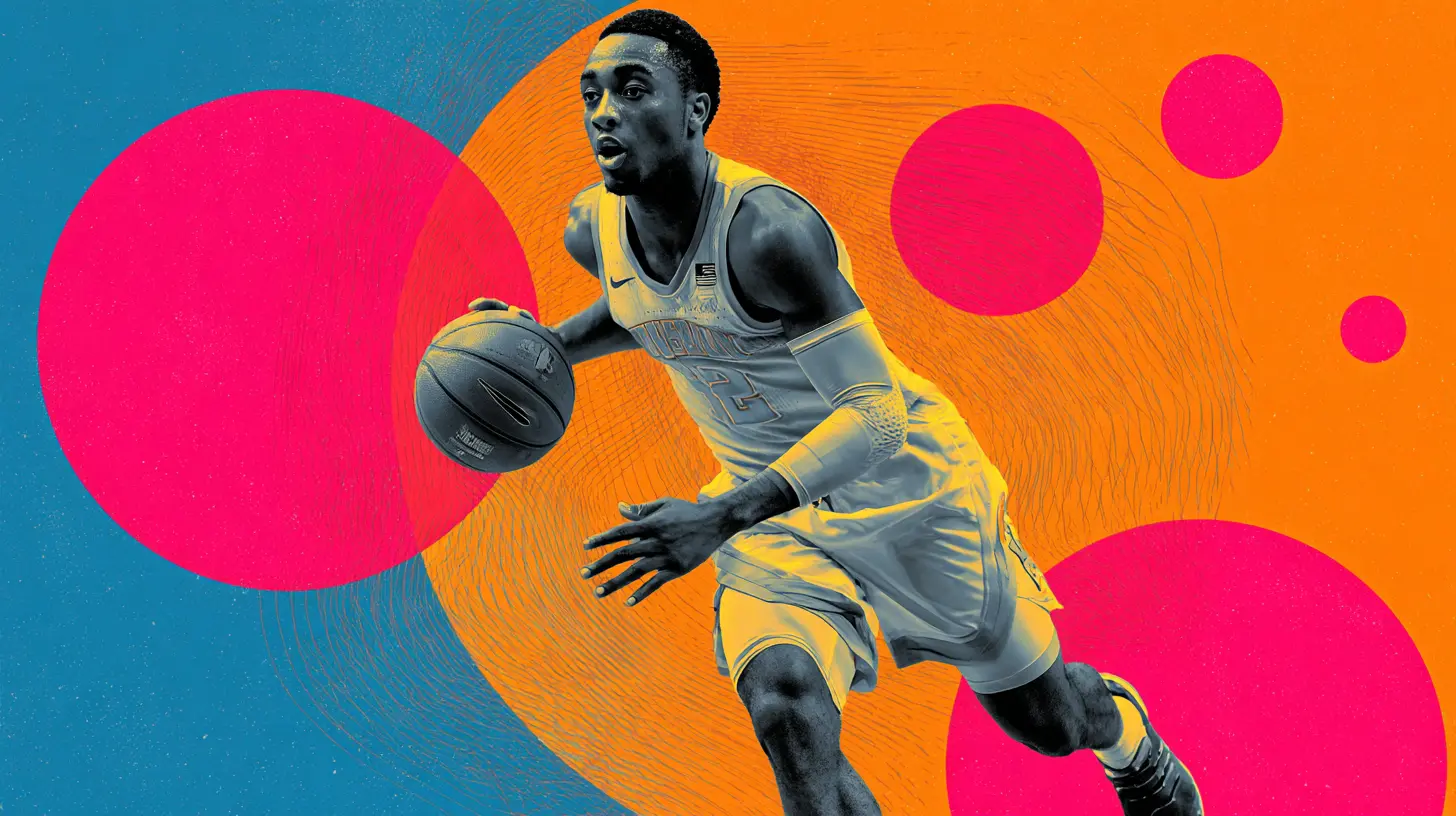
NIL Collectives Become the New Athletic Departments
This is the part that makes me a little nervous. In 2026, the official "athletic department" at a major school might be secondary to the NIL collective. These are the booster-funded organizations that pool money to pay players. Right now, they’re a little shady, operating in a gray area. By 2026, they’ll be fully legitimized.Imagine this: You’re a top-10 recruit. You don’t pick a school based on the coach or the campus. You pick it based on the collective’s budget. "Hey, Alabama’s collective is offering me $500,000 a year, but Kansas’ collective has better endorsement connections with local businesses." It’s a bidding war, plain and simple.
This evolution will create a massive divide. The "haves" (schools with deep-pocketed boosters like Texas, Kentucky, Duke, Kansas) will dominate. The "have-nots" (smaller conferences, mid-majors) will become feeder systems. A kid at a mid-major who has a breakout sophomore season will get poached by a power conference school offering a life-changing check. The Cinderella stories of March Madness might become rarer, because the best players will be concentrated at the top.
But don’t count out the underdog just yet. Smart coaches in 2026 will build rosters differently. They’ll focus on older, more mature players who got passed over in the NIL frenzy. They’ll recruit international kids who aren’t caught up in the American money game. They’ll find diamonds in the rough who play with a chip on their shoulder. The evolution isn’t just about money—it’s about adaptation.
The Schedule Gets Weirder (and Shorter)
Have you noticed that the regular season feels a little bloated? In 2026, it’s going to get a major facelift. The NCAA is terrified of losing the tournament’s golden goose, but they’re also worried about player burnout. With the transfer portal and NIL, kids are already playing 35+ games a year. Add in summer leagues, pre-season exhibitions, and conference tournaments, and you’ve got a recipe for injury.I predict we’ll see a shorter non-conference schedule. Instead of 13 or 14 games, maybe it drops to 10 or 11. The focus will be on high-profile "showcase" events—neutral-site games in NFL stadiums, international trips, and made-for-TV matchups. The regular season will feel more like a highlight reel than a grind.
Also, get ready for more "in-season tournaments." The Maui Invitational and the Battle 4 Atlantis are already huge. By 2026, every major program will play in at least two of these events. They’re lucrative, they’re televised, and they give players a mini-vacation. But they also mess with the traditional rhythm of the season. You’ll see teams playing three games in four days in November, then having a week off in December. The season won’t be a straight line—it’ll be a series of spikes.
Technology Changes the Game (Literally)
Let’s talk about the actual on-court product. In 2026, the game will be faster, smarter, and more data-driven. But it will also be more scrutinized.We’re already seeing the use of AI in scouting. By 2026, every team will have a software that analyzes thousands of hours of game footage in seconds. A coach can ask, "Show me every time our opponent runs a high ball screen against a zone defense in the second half," and the AI spits it out in five seconds. This means game plans will be hyper-specific. There will be no "surprises" left. The best teams will be the ones that can execute perfectly against a prepared opponent.
And what about the refs? We’re getting closer to instant replay for everything. In 2026, I expect a "challenge flag" system similar to the NFL. Coaches will get one challenge per half for specific calls (out of bounds, goaltending, fouls). It will slow the game down, but it will also reduce the number of egregious mistakes. The trade-off is worth it, right?
Also, don’t sleep on the fan experience. By 2026, expect more "augmented reality" features in arenas. You’ll point your phone at the court and see player stats floating in the air. You’ll have in-seat ordering for food. You’ll get real-time betting odds integrated into the arena app. The line between watching a game and being part of a digital ecosystem will blur completely.
The Coaching Carousel Spins Faster Than Ever
Remember when Coach K stayed at Duke for 42 years? That era is dead. In 2026, the average tenure of a power conference coach might be three years. Why? Because the pressure is insane, and the job has changed.Coaches in 2026 aren’t just X’s and O’s guys. They’re recruiters, fundraisers, NIL negotiators, media personalities, and babysitters all rolled into one. If you can’t navigate the portal, you’re fired. If you can’t keep your star player happy with his NIL deal, you’re fired. If you lose in the first round of the tournament two years in a row, you’re fired.
This creates a fascinating dynamic. We’ll see more "retread" coaches—guys who failed at one job but succeed at another because they learn the new system. We’ll also see more young, hungry assistants get head coaching jobs earlier than ever. The old "pay your dues" model is gone. If you can recruit and manage a roster, you’re ready. Age doesn’t matter.
But here’s the scary part: The coaching carousel creates instability for players. A kid commits to a school because of a specific coach. That coach leaves for a better job, and the kid is stuck with a new system. By 2026, recruits will have "coach exit clauses" in their NIL contracts. If the coach leaves, the player can leave too, without penalty. It’s a free market, baby.
The International Game Comes Roaring In
College basketball has always been a little insular. We love our homegrown talent. But by 2026, the international pipeline will be wide open. The NBA has already proven that players from Europe, Africa, and Australia can dominate. College programs are catching on.We’ll see more 18-year-old French prospects, Nigerian big men, and Australian guards coming to the NCAA for one or two years before jumping to the pros. Why? Because the exposure is incredible, and the NIL money is better than a lot of European pro leagues. A kid from Serbia can come to the U.S., play for a year, earn $200,000 in NIL deals, and then get drafted. That’s a no-brainer.
This evolution changes the style of play. International players are often more skilled fundamentally. They pass better, they move without the ball better, and they understand spacing instinctively. By 2026, the "American" style of isolation-heavy, athletic, one-on-one basketball will mix with the "European" style of team-oriented, ball-movement offense. The result? A beautiful, hybrid game that’s even more fun to watch.
What About the Fans? (The Unspoken Evolution)
We’ve talked about players, coaches, and money. But what about us? The fans? How will we evolve in 2026?I think we’re going to become more cynical—but also more passionate. We know the game is a business now. We know players are mercenaries. We know the NCAA is a shell of its former self. But we still love it. Why? Because the tournament is still a miracle. Because the buzzer-beaters still give us chills. Because the energy in a packed arena on a Saturday night is still unmatched.
In 2026, fans will have to accept the chaos. Your favorite player might transfer after a great season. Your team might lose a recruit to a bigger NIL offer. The sport will feel less "pure," but it will feel more real. It’s not amateur sports anymore. It’s minor-league professional basketball with a college logo on the jersey.
And you know what? That’s okay. The evolution is painful, but it’s also exciting. We’re watching the birth of something new. College basketball in 2026 won’t be what it was in 2016. It will be faster, richer, more chaotic, and more global. It will be a reflection of the world we live in—messy, unpredictable, and absolutely unforgettable.
So, grab your popcorn. The next two years are going to be a wild ride. Are you ready?
all images in this post were generated using AI tools
Category:
Season ExpectationsAuthor:

Preston Wilkins
Discussion
rate this article
2 comments
Malia Reynolds
As the game shifts, will we see a revolution in strategy and player dynamics? The future holds unexplored talents and innovations that could redefine college basketball's very essence...
August 16, 2026 at 3:33 AM
Preston Wilkins
Absolutely. The evolution of strategy and emerging talents will shape a new era in college basketball, making it more dynamic than ever. Exciting changes are on the horizon.
Morrow Clarke
Great article! It's fascinating to consider the future of college basketball, especially with advancements in technology and changes in player development. I look forward to seeing how these elements will shape the game and enhance the experience for players and fans alike.
April 28, 2026 at 3:18 AM
Preston Wilkins
Thanks for your thoughts! It really is an exciting time for the game, and I can't wait to see how these changes unfold.