Why the 2026 College Basketball Season Will Be Unpredictable
22 October 2026
College basketball has always carried a reputation for chaos. Single-elimination March brackets, small-conference upsets, and the occasional mid-major team that refuses to go away have made the sport a reliable source of surprises. But the 2026 season feels different. The forces converging on the sport right now are not just the usual competitive randomness. They are structural. Roster rules, financial pressures, scheduling shifts, and a talent pipeline in flux are all colliding at once, and the result is a season that should be genuinely harder to forecast than any in recent memory.
This is not a claim that the sport has become random noise. It is a claim that the variables that once made programs predictable have weakened, while the variables that create volatility have strengthened. Understanding why matters, whether you are a fan trying to make sense of early-season results, a coach building a roster, or an analyst trying to separate signal from noise.
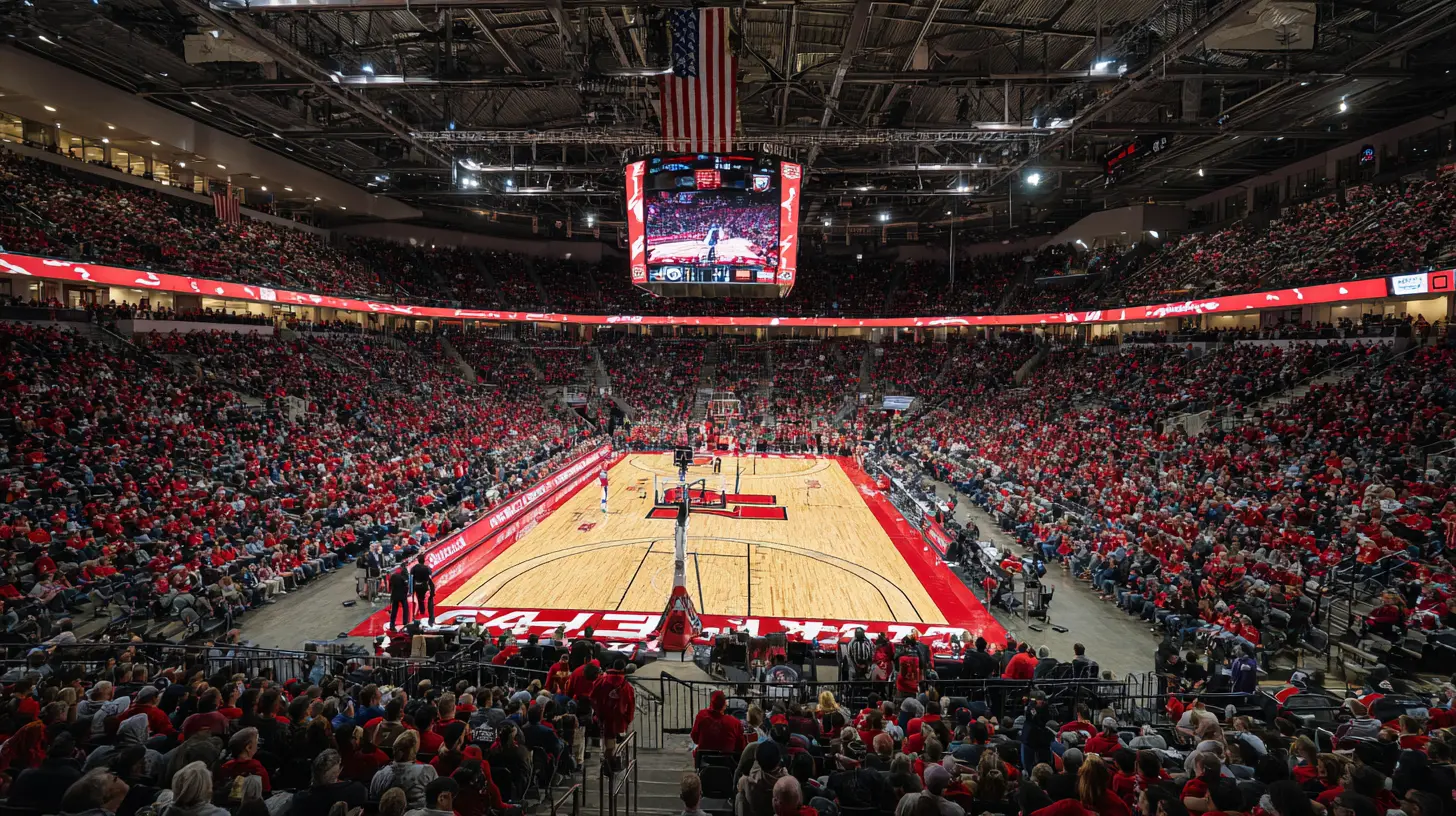
The Portal Has Rewired Roster Construction
The transfer portal is not new. What is new is how thoroughly it has reshaped the math of building a team. A decade ago, a program's trajectory was largely set by recruiting classes and player development. You could project a team's ceiling two or three years out with reasonable confidence because the core of the roster would still be there.That assumption no longer holds. Roster turnover rates have climbed across the sport, and the programs that once relied on continuity now face the same churn as everyone else. The practical effect is that preseason projections built on last year's results are less reliable than they used to be. A team that returns three starters is now the exception rather than the rule at many levels of the sport.
Why continuity still matters, but differently
Continuity has not stopped mattering. It has become harder to acquire and therefore more valuable. Teams that do manage to retain a core of experienced players gain a real edge in execution, defensive communication, and late-game decision-making. The trade-off is that retention often costs money in the name of name, image, and likeness compensation, and programs with smaller budgets face a difficult choice between paying to keep proven players and paying to add immediate help.This creates a split in how programs approach the offseason. Some lean into retention and accept a lower ceiling in exchange for a higher floor. Others churn the roster aggressively, betting that talent acquisition beats cohesion. Both approaches can work. Neither is reliably better, and that is precisely what makes the season hard to predict.
The evaluation problem
There is a subtler issue that gets less attention. When a player transfers, his statistical profile travels with him, but the context does not. A guard who averaged 14 points at a slower-paced program in a weaker conference may see those numbers shrink against better competition and a different role. Analysts who project transfers by carrying over raw statistics tend to overrate them. The programs that evaluate transfers well are asking different questions: How did this player perform against the best teams on his schedule? What was his role when the game was close? How does his skill set fit what we actually need rather than what looks impressive on a stat sheet?That evaluation gap is a major source of preseason error. Two teams can add similarly rated transfer classes and end up with wildly different results, because the fit and the role matter more than the ranking.
NIL and Revenue Sharing Have Created a New Competitive Landscape
The financial side of college sports has changed faster than most fans realize. Name, image, and likeness deals, combined with the emergence of revenue-sharing arrangements at many schools, have turned roster management into something closer to professional free agency than amateur recruiting.The consequence is not simply that rich programs win more. It is that the relationship between spending and results has become less predictable, at least in the short term. Money buys access to talent, but it does not buy cohesion, and it does not buy the kind of player development that turns a good roster into a great team. Programs that spend aggressively but integrate poorly can underperform. Programs with modest budgets but strong culture and clear roles can overperform.
The mid-major squeeze
The programs most affected are often the ones in the middle. High-major programs with resources can absorb losses and replace them. Low-major programs never had much to lose. The squeeze falls on successful mid-majors, which develop players well enough to attract attention from bigger programs and then face the prospect of losing them.This dynamic makes mid-major projections especially treacherous. A team that won 25 games last season may return only a fraction of that production. Conversely, a mid-major that quietly retained its core while bigger programs poached elsewhere could be significantly better than its preseason ranking suggests. If you follow the sport closely, you already know that the teams nobody talks about in October are often the ones causing problems in January.
The Extra Year of Eligibility Has Distorted Experience Curves
The additional year of eligibility granted to athletes affected by the pandemic has worked its way through the system, but its effects are still rippling. Rosters now include players whose class year no longer maps cleanly onto their experience level. A "junior" might be in his fifth year of college basketball. A "senior" might be a first-year starter.This matters for forecasting because experience is one of the most reliable predictors of team performance, and the traditional labels used to measure it have become unreliable. Analysts who rely on class-year breakdowns are working with a distorted map. The better approach is to look at actual minutes played at the college level, adjusted for competition level, and to ask how many players on the roster have been asked to make decisions in high-pressure situations.
The flip side is that older rosters are not automatically better. A team full of fifth-year players who have never played together can lack the chemistry that a younger, more cohesive group develops over a full offseason. Age and experience help, but they are not substitutes for familiarity.

Scheduling Changes Are Compressing the Evaluation Window
Non-conference scheduling has become more strategic and, in some ways, more revealing. Programs are using early-season tournaments and neutral-site games to build resumes, which means more high-quality matchups happen earlier. That is good for fans. It is harder for teams trying to integrate new pieces.The practical problem is that the modern calendar gives coaches less time to experiment before results start counting. A team with six new rotation players may need until January to figure out its best lineup, but its resume is largely built by December. Coaches face a real trade-off: schedule aggressively to build a resume and risk early losses that damage seeding, or schedule conservatively to buy time and risk an underwhelming profile if the team is better than expected.
There is no universally correct answer. What matters is that the choice is deliberate. Programs that schedule to their roster's maturity curve tend to outperform programs that schedule by habit or by reputation.
Conference Realignment Has Made Historical Baselines Less Useful
Realignment has scrambled the conferences that once provided stable baselines for comparison. Teams that spent decades in one league now play in another with different styles, different travel demands, and different levels of competition. Historical head-to-head records and conference strength ratings from previous seasons carry less weight than they used to.This has two effects. First, it makes preseason conference projections less reliable, because the underlying data is drawn from a different competitive environment. Second, it creates style mismatches that are hard to anticipate. A team built to grind in a physical league may struggle in a faster, more perimeter-oriented conference, or vice versa. Coaches are adjusting, but adjustment takes time, and the first season or two in a new league is often bumpy.
For anyone trying to forecast results, the lesson is to weight recent, like-for-like data more heavily and to be skeptical of projections that lean on multi-year conference trends.
The Talent Pipeline Is More International and Less Predictable
The pool of players entering college basketball has diversified. International recruiting has grown, and the pathways into the sport now include routes that did not exist a generation ago. This is broadly good for the sport, but it complicates evaluation.International players often arrive with less scouting coverage and less comparable statistical context. A player who dominated in a European youth league may need a full season to adjust to the speed and physicality of the college game. Some make the adjustment quickly. Others never do. The variance is wider than it is for domestic recruits who have been evaluated for years.
Similarly, the prep-to-college pipeline has become more varied, with different development paths producing players with different readiness levels. The result is that preseason rankings of incoming classes are less predictive than they once were, because the underlying evaluations rest on less consistent information.
Why This Season Specifically Stands Out
Every season has uncertainty. What makes 2026 distinctive is the convergence. The portal, NIL, revenue sharing, the extra eligibility year, realignment, and a shifting talent pipeline are all active at the same time, and their effects compound. A team that loses a key player to the portal may replace him with a transfer who needs a semester to adjust, in a new conference, on a schedule that offers little margin for error.The compounding is what makes forecasting so difficult. Each factor alone is manageable. Together, they create a web of dependencies that is hard to model and harder to intuit. That is not a reason to give up on analysis. It is a reason to change what we analyze.
How to Think About the Season Without Getting Lost
If you want to make sense of a season like this, the most useful shift is to stop asking "who has the best roster on paper" and start asking "which teams have the fewest unresolved dependencies."A team with a clear hierarchy, a defined style, and a roster built to fit that style has fewer unknowns. A team with more talent but more questions about roles, chemistry, and fit has more. Talent still matters, but in a volatile environment, certainty has real value.
Practical signals worth watching
- Retention of players who actually played meaningful minutes, not just retention of scholarship counts.- Transfer additions whose roles are clearly defined and whose skills address a specific need.
- Scheduling that matches the roster's maturity rather than its reputation.
- Coaching staffs with a track record of integrating new players quickly.
- Style consistency across seasons, which suggests a system rather than a collection of individuals.
Common mistakes to avoid
The biggest error is treating preseason rankings as predictions rather than starting points. They are estimates built on incomplete information, and in a season like this, the error bars are wide. The second error is overreacting to early results. A team that loses in November to a good opponent may be fine. A team that wins by 30 against an overmatched opponent may not be as good as it looks. The third error is ignoring context when evaluating transfers, which is the single most common source of projection error in the modern game.The Case for Embracing the Uncertainty
It is tempting to treat unpredictability as a problem to be solved. But there is a case for seeing it as the point. College basketball's appeal has always rested on the idea that outcomes are not predetermined, that a well-coached team with the right pieces can beat a more talented one, and that March rewards the teams that figure themselves out in time.The 2026 season amplifies that. The teams that succeed will not necessarily be the ones with the most talent or the biggest budgets. They will be the ones that resolve their dependencies fastest, build coherent roles, and adapt to a landscape that rewards flexibility over tradition.
That is a harder story to tell in October. It is a better one to watch unfold.
all images in this post were generated using AI tools
Category:
Season ExpectationsAuthor:

Preston Wilkins