Rugby Rumbles: Live Commentary from the Scrum in 2026
14 October 2026
The scrum has always been rugby's most misunderstood ritual. To the casual viewer, it looks like a controlled collision followed by a lottery of penalties. To the front row forward, it is a chess match played with shoulders, hips, and timing measured in fractions of a second. By 2026, that chess match looks different than it did even five years ago, and the commentary surrounding it has changed just as much.
This article examines where scrummaging and its live coverage are heading, why the changes matter, and how players, coaches, and broadcasters should prepare. Whether you are a prop learning your trade, a coach building a set piece program, or a fan trying to understand why the referee just awarded a free kick, the details below are meant to give you something you can actually use.

Why the Scrum Remains the Sport's Defining Contest
Every sport has a moment that concentrates its values into a single event. Baseball has the pitcher-batter duel. Basketball has the pick and roll. Rugby has the scrum.The scrum matters because it combines three things that rarely appear together: raw physical confrontation, intricate technical law, and tactical decision-making under fatigue. A pack that wins its scrums controls field position. A pack that loses them hands momentum to the opposition and invites pressure on its own half.
There is also a psychological dimension that statistics struggle to capture. When a front row dominates, the effect ripples outward. Back rows read the ball earlier. Halfbacks play with more composure. The entire team walks taller. Conversely, a pack that gets shoved backward two or three times in a row starts anticipating failure, and anticipation is the enemy of good technique.
This is why commentators in 2026 spend more time on scrum analysis than they did a decade ago. The contest has not become less important. It has become more legible to audiences who now expect explanations rather than vague praise for "good work in the tight."
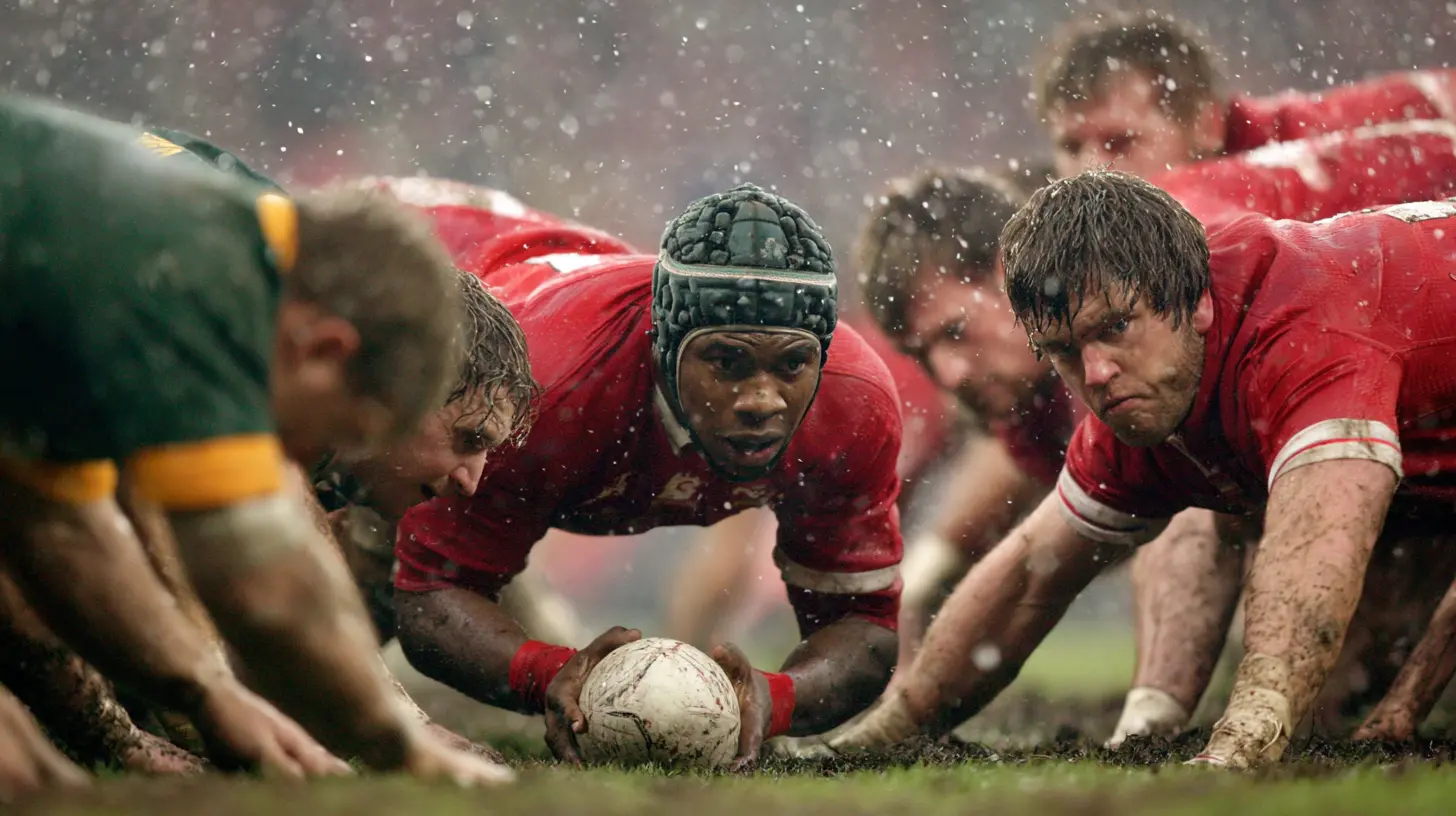
What Live Commentary Looks Like in 2026
Live commentary has split into two distinct layers, and understanding both helps anyone working in the space.The first layer is the traditional broadcast call: a lead commentator describing flow, a color analyst explaining tactics, and a sideline reporter gathering injury and substitution news. This layer still serves the casual audience, and it still rewards a warm, authoritative voice.
The second layer is the data-driven feed. Real-time telemetry from scrum machines, wearable sensors, and video tracking systems now produces numbers that can be surfaced within seconds. Push force per player, engagement timing, and pack stability are no longer guesses. They are measurements.
The best broadcast teams in 2026 blend the two. They do not drown viewers in numbers, and they do not ignore them either. Instead, they use data to confirm or challenge what the eye already suspects. When a tighthead prop is being driven backward, the analyst can say so and then show why: a late bind, a high center of gravity, or a back row that is pushing sideways instead of straight.
The Rise of the Specialist Scrum Analyst
A notable shift is the emergence of the dedicated scrum analyst as a broadcast role. In the past, one color commentator covered everything from breakdown work to kicking strategy. That generalist model is fading at the elite level because the scrum has become too technical for part-time attention.A specialist scrum analyst typically comes from a front row background. They understand that a prop's bind is not just a grip but a lever. They know that a hooker's strike depends on the pack's stability, not just individual speed. They can watch a replay and identify which lock lost their footing, which flanker failed to drive straight, and which tighthead was illegally boring in.
For viewers, this means better explanations. For aspiring analysts, it means a clear career path. If you want to work in this space, learn the laws, study the footage, and get comfortable explaining complex mechanics in plain language.
When Data Helps and When It Misleads
Data is a tool, not a verdict. A scrum machine reading of peak force tells you how hard a pack pushed. It does not tell you whether that force was applied legally, whether it arrived at the right moment, or whether it was sustainable across eighty minutes.Consider a pack that generates enormous force on the first three scrums and then fades. The raw numbers look impressive early. The match outcome tells a different story. Good analysts look at trends, not snapshots. They ask whether force output is holding steady, whether timing is consistent, and whether the opposition is adapting.
The practical takeaway for coaches is simple: use data to ask better questions, not to replace judgment. Numbers should point you toward the footage you need to watch, not replace the watching.

The Technical Evolution of the Modern Scrum
Scrum technique has changed in response to law adjustments, safety research, and the simple fact that players are bigger and faster than they were a generation ago.Engagement Timing and the Crouch Sequence
The engagement sequence has been refined repeatedly over the years, with the goal of reducing catastrophic neck and spine loading. The current approach emphasizes a stable, controlled engagement rather than a violent collision.For players, this means the old mentality of "win the hit" is outdated and dangerous. The modern priority is to arrive in a strong, balanced position and then apply force progressively. A pack that wins the initial collision but loses its shape will usually lose the scrum.
Coaches should drill engagement timing relentlessly. The difference between a well-timed bind and a late one is often the difference between a clean platform and a penalty.
Binding, Boring, and the Laws That Govern Them
Binding is where many scrums are won and lost before the push even begins. A tight bind gives a prop leverage and control. A loose bind invites collapse or illegal angles.Boring in, where a prop drives inward toward the opposition hooker, is a persistent source of penalties. It is also a persistent source of confusion for fans. Commentary should explain that boring in is not merely a technical violation. It is a safety issue, because it destabilizes the entire front row.
The balance here is delicate. Props are taught to gain an advantage, and the line between legal dominance and illegal angle play can be thin. Referees in 2026 have more video support than ever, but the human element remains. This is why communication between captains and referees during the pre-match briefing matters more than most people realize.
The Role of the Back Five
A common mistake among young forwards is believing the scrum belongs to the front row. It does not. The back five generate the majority of the forward drive, and their alignment determines whether that drive goes forward or sideways.Locks must stay low and connected. Flankers must drive straight and resist the urge to break early. The number eight controls the ball at the base and must time the pick or pass based on the pack's stability.
When a scrum fails, the cause is often in the back five, not the front row. Analysts who blame the props reflexively are usually missing the real story.

Tactical Decision-Making at Scrum Time
The scrum is not just a physical contest. It is a decision point, and the choices made around it shape the match.When to Scrum and When to Kick
Teams awarded a penalty in the opposition half face a recurring question: kick for goal, kick for touch and set the lineout, or take the scrum. Each option carries trade-offs.A scrum against a weaker pack is an attacking weapon. It can generate penalties, create space for the backline, and drain the opposition's energy. But it also carries risk. If your pack is tired or outmatched, choosing the scrum can hand momentum to the other side.
Kicking for goal is the safe option when points are scarce. Kicking for touch is valuable when your lineout is strong and your maul is effective. The scrum is the aggressive choice, and it should be made with intent rather than habit.
The Psychology of the Set Piece
Momentum in rugby is fragile, and the scrum is one of the fastest ways to shift it. A single dominant scrum can change a team's body language for the next ten minutes.Smart captains understand this. They will call for a scrum not only when it is tactically sound but when their pack needs a confidence boost or the opposition needs to be reminded who controls the physical battle.
Commentators should highlight these psychological swings. A scrum that produces no points can still be the turning point of a match.
Common Mistakes and Misconceptions
Several myths about scrummaging persist, and they mislead players and fans alike.The first misconception is that size alone wins scrums. Size helps, but technique, timing, and coordination matter more. A well-drilled pack of average size will beat a larger pack that lacks cohesion.
The second misconception is that the scrum is purely about pushing. It is also about stability. A pack that pushes hard but cannot hold its shape will collapse or concede penalties.
The third misconception is that referees guess. Modern officiating uses video review, communication protocols, and structured decision frameworks. Referees still make mistakes, but the process is more rigorous than critics assume.
Finally, many fans believe the scrum slows the game down unnecessarily. In reality, a well-executed scrum takes only a few seconds and creates attacking opportunities that would not otherwise exist. The delays usually come from resets, and resets usually come from poor technique, not from the scrum itself.
Best Practices for Coaches and Players
If you want to build a scrum that holds up under pressure, focus on fundamentals and consistency.First, drill the engagement sequence until it is automatic. Players should not have to think about foot placement or bind timing. Those must be habits.
Second, train the back five as rigorously as the front row. Alignment, body height, and drive angle deserve the same attention as bind technique.
Third, use video review honestly. Celebrate good scrums, but spend more time on the ones that failed. Ask why, not just who.
Fourth, build communication. The hooker, the number eight, and the scrum half must operate as a single unit. Miscommunication at the base costs possession.
Fifth, manage fatigue. A tired pack loses technique before it loses strength. Substitution timing matters as much as starting selection.
What to Expect in 2026 and Beyond
The scrum will keep evolving. Law adjustments will continue, driven by safety research and the desire for a faster, more watchable game. Technology will keep improving, giving analysts more tools and viewers more insight.The risk is overcomplication. If commentary becomes a lecture on biomechanics, casual fans will tune out. The goal should be clarity, not complexity. Explain enough to deepen appreciation, then let the action speak.
For players, the fundamentals will not change. Get low, bind tight, drive straight, and stay connected. Those principles have survived every law change and every shift in playing style.
For coaches, the challenge is balancing tradition with innovation. Respect what works, but stay curious about what could work better.
For fans, the reward is a deeper understanding of a contest that rewards intelligence as much as strength. Once you see the scrum clearly, you cannot unsee it. You notice the small adjustments, the quiet negotiations, and the moment when one pack breaks.
That is the real drama of rugby, and it happens every time the front rows lock horns.
all images in this post were generated using AI tools
Category:
Live CommentaryAuthor:

Preston Wilkins