Are We Entering a New Era in the NBA by 2026?
28 September 2026
The NBA has always moved in cycles. The 1980s belonged to Magic Johnson and Larry Bird, two stars whose rivalry dragged a struggling league into the mainstream. The 1990s were defined by Michael Jordan and the Chicago Bulls, a dynasty that turned basketball into a global product. The 2000s gave us the Kobe and Shaq Lakers, the Tim Duncan Spurs, and the rise of international players. The 2010s were shaped by the Miami Heat superteam experiment, the Golden State Warriors' three-point revolution, and LeBron James carrying the torch across multiple franchises.
So when people ask whether we are entering a new era by 2026, the question is not whether change is coming. Change is always coming. The real question is whether the changes we are seeing now represent a genuine structural shift, or just the normal churn of talent and tactics that happens every few years.
My answer leans toward yes, but with important caveats. The NBA in 2026 will look different in ways that go beyond who is winning championships. The economics, the style of play, the geography of power, and the relationship between players and teams are all shifting at the same time. That combination is what makes this moment feel like a true transition rather than a routine reset.
What Defines an Era in the First Place
Before we can judge whether a new era is starting, we need a working definition. An era in the NBA is not just a period of time. It is a stretch where a few dominant forces, whether players, teams, or systems, set the terms for everyone else.Think about what made the Warriors era distinct. It was not only that Golden State won four titles between 2015 and 2022. It was that every other team had to decide how to respond to their style. Some tried to copy the small-ball, three-point-heavy approach. Others built rosters specifically to beat them. The Warriors forced a league-wide conversation about pace, spacing, and positional flexibility. That is what an era does. It changes the default assumptions.
By that standard, we should look for three things. First, a shift in who holds power, whether that means new contenders replacing old ones or players gaining leverage over teams. Second, a shift in how the game is played, including strategy, officiating, and roster construction. Third, a shift in the broader context, such as media rights, international growth, and labor relations.
By 2026, all three of these areas are likely to look meaningfully different than they did in 2020.
The Post-LeBron, Post-Curry Reality
LeBron James and Stephen Curry have been the two most influential players of the past fifteen years. LeBron redefined player empowerment and positional versatility. Curry redefined shooting range and offensive gravity. Even if both are still playing in 2026, they will not be the same players who dominated the 2010s.The more important question is who fills the vacuum. The league has a deep pool of young stars who have already shown they can carry teams. Players like Luka Doncic, Jayson Tatum, Anthony Edwards, Shai Gilgeous-Alexander, and Victor Wembanyama represent different archetypes. Doncic is a heliocentric playmaker who controls every possession. Tatum is a two-way wing who can score from all three levels. Edwards is an explosive athlete with growing shot creation. Gilgeous-Alexander is a master of pace and angles. Wembanyama is a genuinely unprecedented combination of height, skill, and defensive range.
What makes this group different from previous generations is that none of them play the same way. There is no single template. In the 2010s, every young guard wanted to shoot like Curry. In the 2020s, there is no consensus model. That diversity is itself a sign of a new era. When no single style dominates, the league becomes more unpredictable, and unpredictability is good for competition.
Why This Matters for Team Building
If you are running a team in 2026, you cannot just copy the last champion. You have to figure out which style fits your best player and then build around that. A team with Wembanyama should probably play a more traditional inside-out game with rim protection as the anchor. A team with Doncic should surround him with shooters and lob threats. A team with Edwards might prioritize transition offense and perimeter defense.This sounds obvious, but it is a real shift. For years, front offices tried to replicate the Warriors or the Heat. Now the smart ones are asking a different question. What does our guy do best, and how do we maximize that? That is a healthier approach, but it also requires more patience and more creativity.
The New CBA and the End of Superteams
The collective bargaining agreement that took effect in 2023 introduced some of the most restrictive salary cap rules in NBA history. The second apron, in particular, punishes teams that spend far above the luxury tax line. It limits their ability to trade future first-round picks, reduces their access to mid-level exceptions, and makes it harder to keep a deep roster of expensive players.The intent is clear. The league wants to discourage the kind of superteam stacking that defined the 2010s. Whether it will work is still an open question, but the early signs suggest it is already changing behavior.
What the Second Apron Actually Does
Under the new rules, teams that exceed the second apron face several penalties. They cannot use the taxpayer mid-level exception. They cannot trade their first-round pick seven years out. They cannot take back more salary than they send out in a trade. And if they stay above the second apron for multiple years, their draft pick at the end of the first round may move to the end of the round or even become a second-round pick.These are not minor inconveniences. They make it extremely difficult to maintain a roster with three or four max-level players. The days of the Warriors paying luxury tax bills that exceeded the salary cap are effectively over, unless a team is willing to accept severe roster-building limitations.
The Trade-Offs
There is a real debate here. Supporters of the second apron argue that it promotes parity. Small-market teams can keep their stars because big-market teams cannot simply outspend them. The league becomes more competitive, and more fan bases have hope.Critics argue that it punishes success and makes it harder for teams to keep homegrown talent together. If a team drafts three stars and develops them into a contender, the second apron might force them to break up that core before they reach their full potential. That feels unfair to fans who watched those players grow.
My view is that the truth is somewhere in between. The second apron will likely prevent the most extreme forms of superteam building, but it will not create perfect parity. Teams with smart front offices, strong player development, and good luck in the draft will still have advantages. The difference is that those advantages will come from competence rather than spending power. That is probably a good thing for the league overall, even if it creates some awkward moments for teams that built their rosters under the old rules.
The International Takeover
One of the most striking trends in recent years is the rise of international players as the face of the league. The MVP award has gone to players born outside the United States for several consecutive seasons. That is not a coincidence. It reflects a deeper shift in how basketball is taught and played around the world.International players often develop in systems that emphasize fundamentals, team play, and skill development over raw athleticism. They learn to shoot, pass, and read the game at a young age. By the time they reach the NBA, they are often more polished than their American counterparts.
By 2026, this trend is likely to accelerate. The league has invested heavily in international scouting and development. The Basketball Africa League, the NBA's partnerships in Europe, and the growth of the G League Ignite program have all expanded the talent pipeline. More importantly, young players around the world now see the NBA as a realistic goal, not a distant dream.
What This Means for Style of Play
International players have already influenced how the game is played. The pick-and-roll, once a niche action, is now the foundation of most NBA offenses. That is partly because of players like Dirk Nowitzki, Tony Parker, and Manu Ginobili, who showed how effective it could be when run with precision.In 2026, I expect to see even more emphasis on skill and decision-making. The most valuable players will be those who can shoot, pass, and defend multiple positions. Pure isolation scorers will still have a role, but they will need to be exceptionally efficient to justify their usage.
The Load Management Problem
No conversation about the NBA's future is complete without addressing load management. The practice of resting healthy players during the regular season has become a flashpoint between teams, fans, and the league office.The league has responded with rules that penalize teams for sitting healthy stars in nationally televised games. The player participation policy, introduced in 2023, is an attempt to balance the need for rest with the need for entertainment. Whether it will work is unclear.
Why Load Management Exists
The root cause is simple. The NBA season is long. Eighty-two games is a grind, and the playoffs require a different level of intensity. Teams believe that resting players during the regular season increases their chances of winning a championship. Given the stakes, that logic is hard to argue with.But there is a cost. Fans pay to see stars. Television partners pay for ratings. When a star sits out a marquee game, everyone loses. The league's new rules are an attempt to protect the product, but they may not address the underlying issue.
The Real Solution
If the league wants to reduce load management, it needs to reduce the burden on players. That could mean a shorter regular season, a more balanced schedule, or changes to the playoff format. Each of these options has trade-offs. A shorter season means less revenue. A more balanced schedule is difficult given travel and arena availability. A play-in tournament or expanded playoffs might reduce the incentive to rest, but it could also dilute the meaning of the regular season.My guess is that by 2026, we will see some experimentation. The league might test a mid-season tournament with real stakes, or it might adjust the schedule to reduce back-to-backs and travel. The goal is to make the regular season matter more, so that teams have a reason to play their best players.
The Rise of Positionless Basketball
The term "positionless basketball" has been around for years, but it is finally becoming a reality. Teams are increasingly drafting and developing players who can play multiple roles. A 6-foot-9 forward might handle the ball, guard centers, and shoot threes. A 6-foot-4 guard might post up smaller defenders and switch onto wings.This shift has profound implications for roster construction. In the past, teams needed a traditional point guard, shooting guard, small forward, power forward, and center. Now, the lines are blurred. What matters is skill, versatility, and fit.
Why It Works
Positionless basketball works because it creates mismatches. If every player on the floor can shoot, pass, and defend, the offense becomes unpredictable. Defenses cannot key on one player or one action. They have to guard everyone, everywhere.It also works because it allows teams to switch on defense. Switching is the simplest way to disrupt pick-and-rolls and off-ball movement. If all five players are roughly the same size and athleticism, switching becomes seamless.
The Limits
Positionless basketball is not a cure-all. It requires players who are genuinely skilled, not just versatile in theory. A team of 6-foot-8 forwards who cannot shoot or pass is not positionless. It is just a team without a point guard.There is also a physical cost. Smaller lineups can be worn down by bigger, stronger opponents. That is why teams like the Denver Nuggets, with Nikola Jokic at center, have found success by blending size with skill. The future is not about eliminating positions. It is about making them fluid.
Media, Money, and the Next TV Deal
The NBA's national television contracts are set to expire in the mid-2020s. The next deal will shape the league's finances for years to come. Streaming services are likely to play a bigger role, and that could change how fans watch games.More money from media rights means a higher salary cap, which means higher player salaries. It also means more pressure on teams to generate revenue. That could lead to more sponsorships, more international games, and more experimentation with new formats.
What Fans Should Watch
The biggest question is whether the next TV deal will make games more accessible or less. If streaming services split the rights, fans might need multiple subscriptions to watch their favorite team. That would be a step backward for accessibility.On the other hand, streaming could allow for more personalized experiences. Imagine choosing your camera angle, listening to your preferred announcers, or watching a game in virtual reality. Those possibilities are exciting, but they depend on how the league structures its deals.
Conclusion: A New Era, But Not a Clean Break
So, are we entering a new era in the NBA by 2026? I think we are, but it is not a clean break from the past. It is more like a gradual shift that has been building for years.The old guard is fading, but not gone. The new stars are rising, but they have not yet fully taken over. The rules are changing, but their impact is still unfolding. The style of play is evolving, but the core principles of the game remain the same.
What makes this moment feel like a new era is the convergence of so many changes at once. The economics, the tactics, the talent pool, and the media landscape are all shifting simultaneously. That is rare. It happened in the 1980s, when Magic and Bird saved the league. It happened in the 2010s, when the Warriors changed everything. And it is happening now.
For fans, the next few years will be fascinating. For teams, they will be challenging. The ones that adapt will thrive. The ones that cling to old models will fall behind. That is the nature of a new era. It rewards those who see it coming and punishes those who do not.
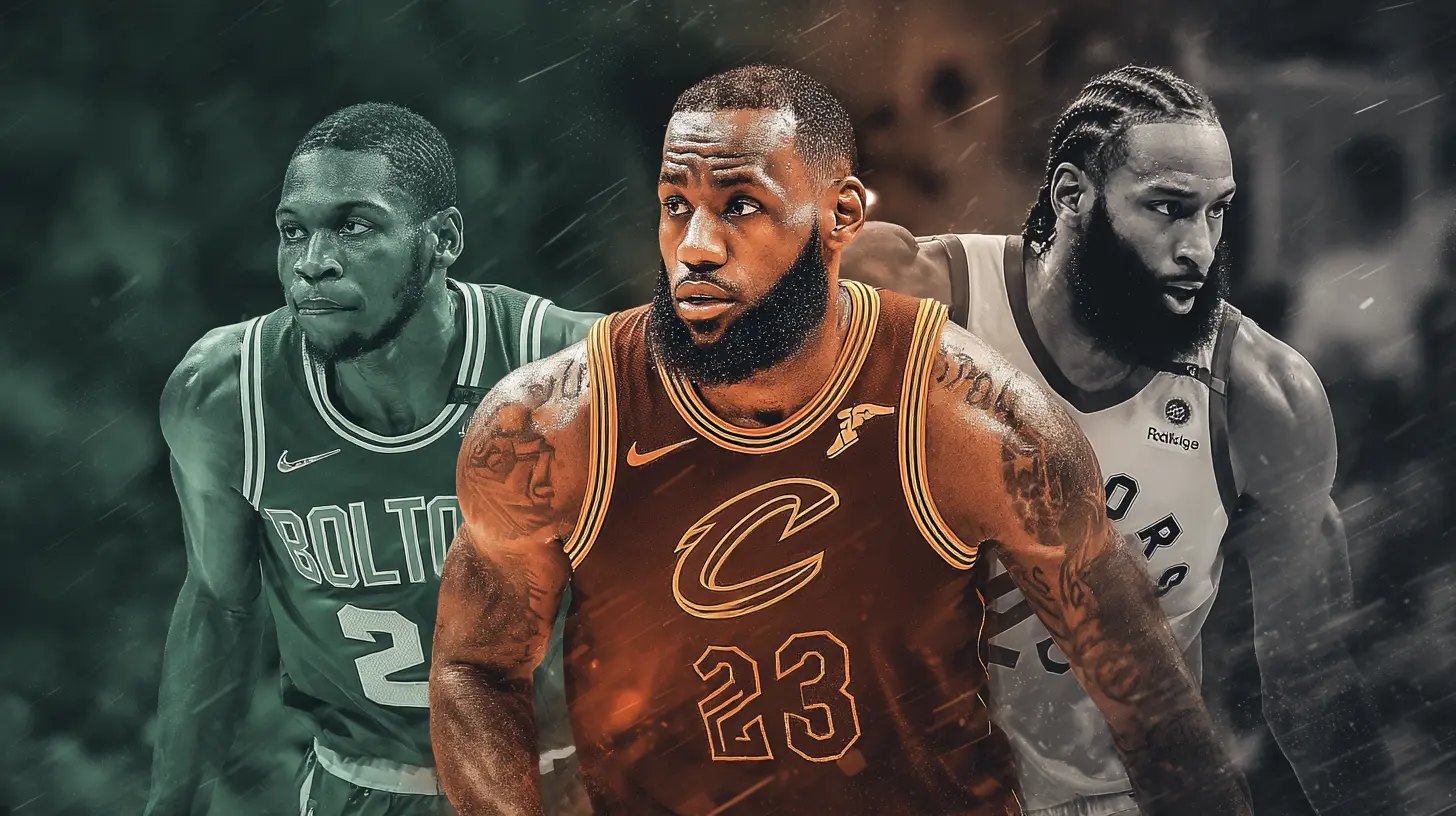
all images in this post were generated using AI tools
Category:
Season ExpectationsAuthor:

Preston Wilkins