Why the 2026 College Football Season Could Be the Most Competitive Yet
19 October 2026
College football has always sold itself on chaos. But the 2026 season might be the first one where the chaos is structural rather than accidental. Between the expanded playoff settling into its new rhythm, the transfer portal turning rosters over at a rate that would have shocked coaches a decade ago, and name, image, and likeness money flattening the talent distribution, the gap between the top programs and the hungry ones is narrowing in ways that matter on Saturdays.
That does not mean 2026 will produce a Cinderella national champion. It means the weekly product should be tighter, the margins thinner, and the number of teams with a legitimate path to the bracket larger than at any point in the sport's modern history. Here is why, along with what to watch, what to be skeptical of, and how to think about the season before the first kickoff.
The Playoff Format Is Doing Exactly What It Was Designed to Do
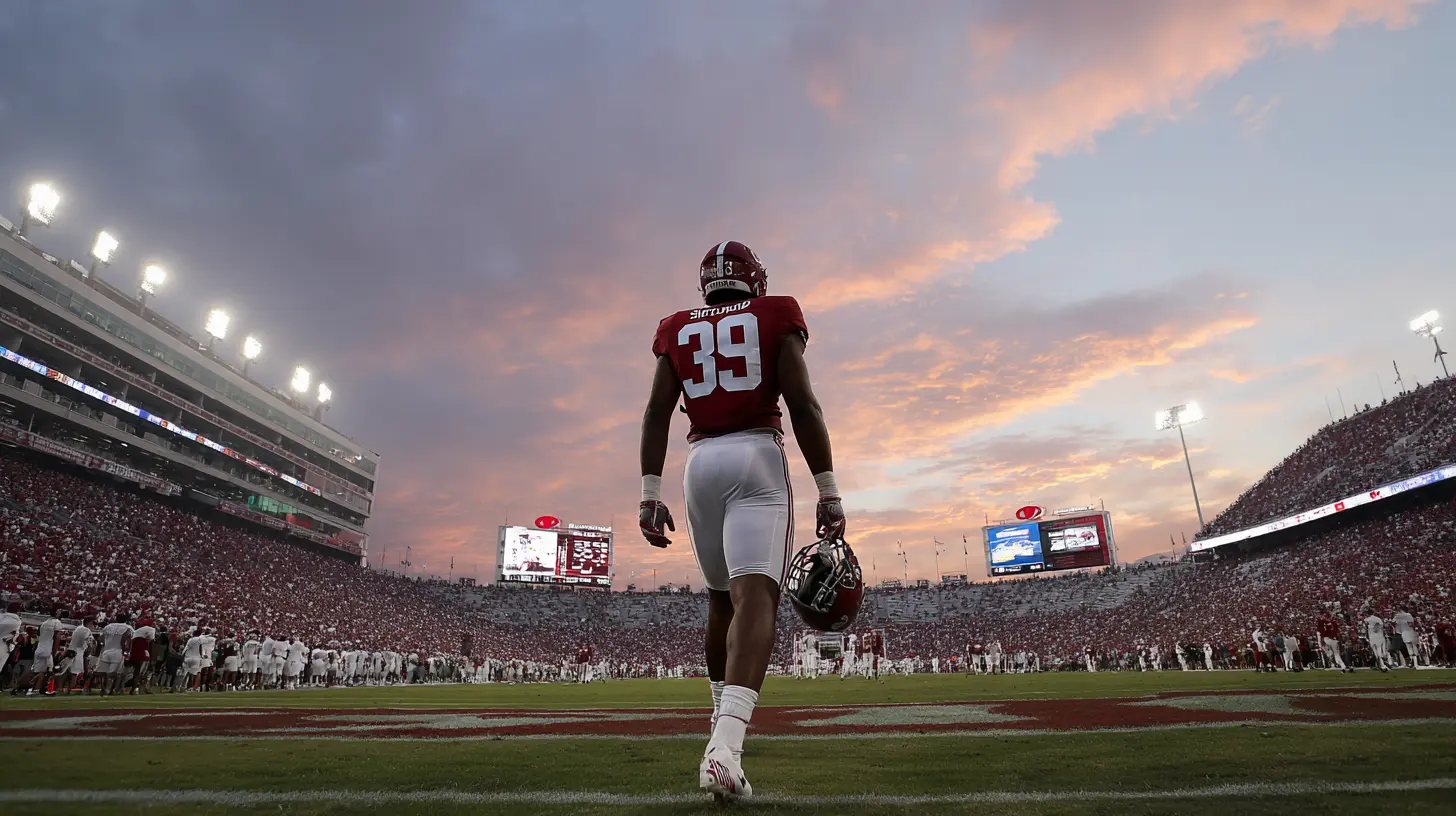
The twelve-team bracket changed the incentive structure of the entire sport. Under the four-team model, a single loss in September could effectively end a season. Coaches responded rationally: schedule soft non-conference opponents, protect the record, and hope the committee forgives one blemish. The result was a lot of 49-7 games in weeks two and three that nobody needed to watch.With twelve spots, the math changes. A two-loss team from a power conference has a real argument. A one-loss team from a strong Group of Five league has a path. That changes scheduling philosophy at the margins. Athletic directors now have reason to accept home-and-home series against peer programs because a loss no longer torpedoes the season, and a win builds a resume that the selection committee can actually use.
There is a trade-off here that deserves honest treatment. Expansion also means more blowouts in the first round, and there is a legitimate debate about whether a team ranked eleventh truly deserves a shot. But the competitive effect on the regular season is real. When more teams have something to play for in November, more games matter. That is the whole ballgame.
What This Means for Conference Races
In the old system, conference championship games were often elimination games for one team and formalities for the other. Now they function more like resume boosters. A team that loses a close conference title game can still make the field. That reduces the desperation factor slightly, but it increases the number of teams still alive entering the final weekend, which is the outcome fans should care about most.
Roster Turnover Has Become a Competitive Equalizer
The transfer portal gets discussed mostly as a source of chaos, but its competitive effect is more subtle and more interesting. In the past, blue-blood programs stockpiled depth. A five-star quarterback who lost a position battle would sit for two years and then maybe start as a junior. Now that player leaves, and he often lands at a program that desperately needs him.The result is a redistribution of talent that would have been unthinkable under the old rules. A mid-tier power conference program can now field a starting lineup built substantially from transfers, and if the evaluation is right, that lineup can compete with anyone on a given Saturday. The programs that win in this environment are not necessarily the ones with the most money. They are the ones with the best evaluation departments and the cleanest roster-fit processes.
The Risk Nobody Talks About Enough
Portal success is not automatic. Programs that treat the portal like a fantasy draft, stacking talented players without regard to scheme fit or locker room chemistry, tend to underperform. The teams that thrive are the ones that identify specific needs, recruit to those needs, and integrate newcomers into an established culture quickly. That is a management skill, not a spending skill, and it is why the portal has genuinely leveled the field rather than simply enriching the richest programs.
NIL Has Flattened the Recruiting Hierarchy, With Caveats
Name, image, and likeness compensation has changed the calculus for elite recruits. A five-star prospect can now earn meaningful money at a program that is not a traditional powerhouse. That does not mean Alabama, Georgia, Ohio State, and the like have lost their edge. Their brands, development pipelines, and NFL track records still matter enormously. But the monopoly on top-tier talent is gone.The practical effect is that the tier of programs capable of signing a top-five class has widened. That shows up on the field as more teams with difference-making skill players, which is exactly the kind of talent that produces upsets. When both teams have a receiver who can win a one-on-one, the game comes down to coaching and execution rather than raw material.
A Word of Caution on NIL Narratives
It is tempting to attribute every roster shift to money, and that is a mistake. Playing time, development, scheme fit, and relationships with position coaches still drive most decisions. NIL is a factor, sometimes a decisive one, but treating it as the only variable leads to lazy analysis and bad predictions. The programs winning in this era are the ones that treat NIL as one input among many rather than the whole equation.
Coaching Depth Is Better Than It Has Ever Been
There was a time when the coaching talent gap between the top ten programs and everyone else was enormous. That gap has compressed. Coordinators who would have been head coaches at major programs twenty years ago are now running offenses at places that were afterthoughts. The proliferation of spread concepts, the spread of analytics departments, and the sheer volume of coaching clinics and content have raised the floor across the sport.This matters for competitiveness because coaching is the great variable. Talent differentials can be overcome by superior scheme and preparation. When the coaching gap narrows, the talent gap matters less, and the games get closer. That is the dynamic to watch in 2026.
Why This Creates More Upsets, Not Fewer
Counterintuitively, better coaching across the board produces more upsets, not fewer. When the underdog has a well-coached staff with a coherent plan, the talent advantage of the favorite gets neutralized more often. The teams that win consistently are the ones that combine elite talent with elite coaching, and there are only so many of those.The Group of Five Has a Real Seat at the Table
The guaranteed playoff spot for the highest-ranked Group of Five champion is one of the most consequential changes in the sport's history. It gives those programs something to sell on the recruiting trail, something to play for in November, and something to point to when arguing that the gap is closing.Will a Group of Five team win the whole thing? Probably not. But the path exists, and the existence of the path changes behavior. Coaches at those programs can now recruit with a credible pitch about competing for a national title. That attracts better players, which raises the level of play, which makes the games more competitive. It is a virtuous cycle that the old system actively suppressed.
The Scheduling Question
The Group of Five's biggest obstacle is scheduling. Power conference programs have historically paid for guarantee games, and those games are often unwinnable for the visitor. But as the playoff expands and resume quality matters more, there is growing pressure to schedule real opponents. If that trend continues, the quality of non-conference play should improve, which benefits everyone.
Quarterback Play Is Deeper Than Ever
The quarterback position has been transformed by the spread offense and by the way young players develop through seven-on-seven circuits and private coaching. The result is a deeper pool of capable starters than at any point in the sport's history. There are more than sixty quarterbacks in the FBS who can genuinely win a game with their arm and legs, and that number keeps growing.For competitiveness, this is enormous. The single biggest determinant of a team's ceiling is quarterback play. When more teams have a good one, more teams have a high ceiling. The days of a program being unable to compete because it lacks a passer are largely over, provided the evaluation and development are sound.
The Development Trap
There is a flip side. The pressure to play young quarterbacks immediately, driven by the portal and by fan impatience, has shortened development timelines. Some programs now cycle through quarterbacks so quickly that nobody ever gets comfortable in the system. The teams that resist this pressure and commit to a starter through rough patches tend to be rewarded. That is a best practice worth watching for in 2026.What Could Undermine the Competitive Thesis
Honesty requires acknowledging the counterarguments. The teams with the biggest budgets and the best infrastructure still have structural advantages. The same programs will likely occupy the top of the rankings. Depth still matters, and depth is expensive. Injuries to key players can still derail a season, and the programs with the most talent can absorb them better.There is also a risk that the expanded playoff produces more lopsided first-round games than anyone wants. If that happens, the competitive narrative weakens. But the regular season, which is where competitiveness actually lives, should be the best it has been in a generation.
The Realistic Prediction
Expect more ranked matchups, more meaningful November games, and more teams in the hunt deep into the season. Expect the blue-bloods to remain blue-bloods. Expect the middle class to be more dangerous than it has been in decades. Expect chaos, but the productive kind.
Practical Advice for Following the 2026 Season
If you want to actually understand what you are watching, focus on a few things. Track portal additions by position group rather than by star rating. Watch how quickly new coordinators install their systems in the first three games. Pay attention to scheduling philosophy, because it tells you what a program believes about its own chances. And resist the urge to declare a season over after week two.For fans of programs outside the traditional elite, this is the most hopeful era in memory. For fans of the blue-bloods, it is the most demanding. Both groups should enjoy it, because competitive balance is the thing that makes the sport worth watching in the first place.
all images in this post were generated using AI tools
Category:
Season ExpectationsAuthor:

Preston Wilkins