Why Soccer Fans Should Be Excited About 2026
18 October 2026
The 2026 World Cup is not just another tournament on the calendar. It is the biggest structural change to international soccer in a generation, and it will touch almost every part of the sport fans care about. More teams, more matches, three host nations, a new format, and a tournament that will stretch across a continent. Some of this is thrilling. Some of it is genuinely complicated. Both are worth understanding before the opening whistle.
This article looks at what is actually changing, why it matters, where the risks sit, and how fans can get the most out of the run-up. No hype, no recycled previews. Just the details that will shape what you watch, argue about, and remember.

The Format Change Is the Real Story
Most coverage of 2026 focuses on the expansion from 32 to 48 teams. That is the headline, but the format is where the real consequences live.How the 48-team structure works
The tournament will use 12 groups of four teams. The top two from each group advance, plus the eight best third-placed teams. That produces a round of 32, followed by the round of 16, quarterfinals, semifinals, and final.Compare that to 2022, where 32 teams played 64 matches in eight groups of four, with the top two advancing straight to a round of 16. The 2026 version adds 40 matches, bringing the total to 104.
Why does this matter? Three reasons.
First, the margin for error in the group stage shifts. In a 32-team World Cup, finishing third usually means going home. In 2026, a third-place finish can still be enough, depending on results elsewhere. That changes how coaches approach the final group game. Some will play conservatively to protect a draw, knowing a narrow loss might not be fatal. Others will chase goal difference because the third-place table rewards it.
Second, the round of 32 adds an extra knockout round. That means a team that reaches the final will play eight matches instead of seven. Over a five-week tournament, that extra game is not trivial. It affects rotation, recovery, and squad depth. Teams with strong benches gain an edge; teams that rely on eleven players will feel it.
Third, the third-place calculation introduces a live table that fans will track across groups. This is a genuine novelty. You will find yourself checking results in a group you have no emotional stake in because your team's potential round of 32 opponent depends on it. That is a different kind of engagement, and it can be fun or maddening depending on your tolerance for scoreboard watching.
What the extra knockout round means tactically
A round of 32 changes risk calculus. In a 32-team tournament, winning your group often meant a softer round of 16 draw. In 2026, winning your group still matters, but the reward is a round of 32 match against a third-placed team or a runner-up, and the path beyond that is less predictable.This creates an interesting trade-off. Some coaches may prefer to finish second in a strong group rather than win it, if the bracket on the other side looks more favorable. That kind of calculation already happens in some tournaments, but the expanded bracket makes it more pronounced. Fans should expect more visible bracket math in the final group games, and more debate about whether it is smart or cynical.
My view: it is smart. Tournament soccer has always rewarded teams that manage the bracket, not just the match in front of them. The 2026 format simply makes that skill more important.

Three Host Nations, Three Different Tournaments
The 2026 World Cup will be hosted by the United States, Canada, and Mexico. That is not a logistical footnote. It is a defining feature.Travel and altitude will shape results
The venues span a huge range of climates and conditions. Matches in Mexico City will be played at high altitude, where the ball travels faster and players who are not acclimated tire quickly. Matches in the southern United States in June and July will be played in heat and humidity that can slow the game and increase cramping and fatigue. Matches in Canada will feel different again.This is not hypothetical. Altitude has affected World Cup matches before, most famously in Mexico in 1970 and 1986. Heat has affected tournaments in the United States before, notably the 1994 World Cup, where midday kickoffs in hot cities drew criticism for player welfare.
For fans, this means the tournament will not feel uniform. A group played entirely in Mexico will look different from a group played in the northern United States. Teams that prepare for conditions, with acclimation camps and rotation plans, will have an advantage that has nothing to do with talent.
Practical advice: when the schedule is released, look at where your team plays, not just who they play. A team with three matches in hot, humid cities and short rest between them faces a different challenge than a team with matches in cooler venues. That is a real variable, and it is worth factoring into your expectations.
Time zones and viewing habits
The three host nations span multiple time zones. For fans in Europe, Asia, and Africa, that means match times will vary widely. Some games will be in prime time; others will be in the middle of the night. This is true of every World Cup outside your own region, but the spread across North America is wider than in most tournaments.The practical consequence is that you will need a plan. Decide in advance which matches you will watch live and which you will catch later. Trying to watch everything live across a five-week tournament in unfamiliar time zones is a recipe for exhaustion. Pick your must-watch games, protect your sleep for the ones that matter, and let the rest go.

More Teams Means More Stories, and More Blowouts
Expansion is the most debated change. Let us look at both sides honestly.The case for 48 teams
More teams means more countries get a taste of the World Cup. That matters. For fans in nations that have never qualified, or have not qualified in decades, the expanded field is a genuine opportunity. It gives smaller federations a realistic target, and it gives their players a stage that can change careers and grow the sport at home.It also means more variety. The 2026 tournament will feature teams and styles that the 32-team format often excluded. That is good for fans who enjoy seeing different approaches, and it is good for the global game.
The case against
The counterargument is quality. A 48-team field means more matches between teams with a large gap in level. Some group games will be lopsided. That is already true in 32-team tournaments, but expansion increases the number of mismatches.There is also the third-place complication. A team that loses two group games can still advance if results fall right. Some fans find that unsatisfying. Others see it as a fair reward for a team that competed well in a tough group.
My take: both views are valid. The expansion will produce more memorable underdog stories and more forgettable blowouts. Whether that trade is worth it depends on what you value. If you watch the World Cup for the drama of the knockout rounds, the extra round is a bonus. If you watch for elite matchups in the group stage, you will notice the drop-off.
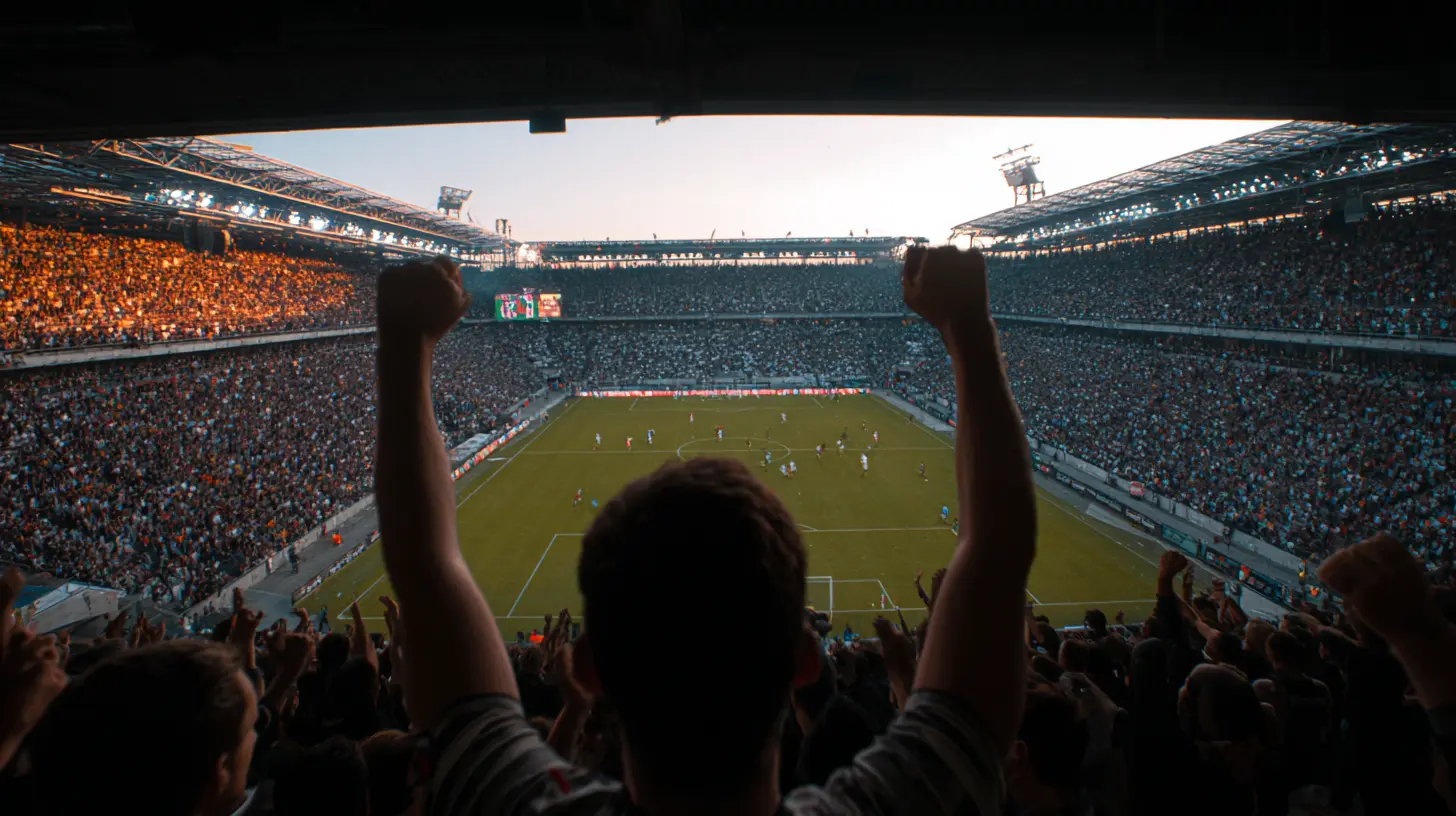
The Soccer Itself: What to Watch For
Beyond format and logistics, there are tactical trends worth tracking as the tournament approaches.Squad depth will matter more than ever
Eight matches to win the trophy, in heat and at altitude, across a continent. That is a physical load that rewards teams with deep squads. Teams that can rotate without a big drop in quality will be better positioned than teams that depend on a fixed starting eleven.This is a real shift. In past tournaments, a star-heavy team could ride its best players through seven matches. In 2026, the cumulative load is higher. Expect coaches to use all five substitutions more aggressively, and expect the teams that manage minutes well to be the ones still standing in the semifinals.
The third-place table changes group-stage tactics
As mentioned earlier, the third-place table will influence decisions. Teams that are trailing in a group may push harder for goals late in games, because goal difference could decide whether they advance as a best third-placed team. That should produce more open, attacking endings in group games, which is good for neutrals.But it also creates a strange incentive: a team that is comfortably third may prefer to protect a narrow loss rather than chase an equalizer that could expose them to a counterattack. Fans should watch for this. It is a subtle tactical wrinkle that will shape how some games end.
The bracket becomes a live puzzle
With 12 groups and a third-place table, the knockout bracket is more complex than before. Fans will need to track multiple groups to know who plays whom. That is more work, but it is also more engaging. It turns the group stage into a puzzle, not just a series of matches.Practical advice: bookmark a bracket tracker once the schedule is out, and check it after each matchday. Trying to work it out in your head is possible but error-prone. A good tracker will show you the possible paths for your team as results come in.
Common Misconceptions to Avoid
A few ideas about 2026 are already circulating that are worth correcting.Misconception one: more teams means the tournament is diluted beyond watchability. Not necessarily. The group stage will have more mismatches, but the knockout rounds will still feature the best teams. The tournament is longer, but the quality at the sharp end is not lower. Judge the format by the whole experience, not just the weakest group games.
Misconception two: the host nations get an easy path. Hosts get automatic qualification, but they do not get an easy bracket. If anything, the pressure and travel can work against them. Host advantage in soccer is real but modest, and it does not guarantee deep runs.
Misconception three: the expanded format is only about money. Revenue is certainly part of the motivation for FIFA, and fans should be clear-eyed about that. But expansion also has genuine sporting and developmental arguments. Both things can be true. The honest position is that the change has mixed motives and mixed consequences, and it is worth watching how it plays out rather than assuming the worst or the best.
Misconception four: the tournament will feel like three separate World Cups. It might, in the group stage, because the travel is so spread out. But the knockout rounds will bring teams together, and the final will be a single event. The tournament will have a different rhythm than past editions, not a fractured one.
How to Prepare as a Fan
A few practical steps will make the 2026 experience better.Follow the qualifiers, not just the finals. The qualifying campaigns are where the stories start. Watching a nation qualify for the first time, or a traditional power struggle, gives you context that makes the finals richer. It also helps you understand which teams are in form and which are not.
Learn the venues. Once the schedule is out, look up the stadiums and cities. Altitude, heat, and travel are real factors. Knowing where your team plays helps you set realistic expectations and spot the games that will be most demanding.
Plan your viewing around rest. A five-week tournament across multiple time zones is a marathon. Decide which matches you will watch live and which you will catch later. Protect your sleep for the games that matter most to you.
Track the bracket early. The third-place table and the round of 32 make the bracket a live puzzle. A good tracker will save you confusion and add to the drama.
Do not overreact to the group stage. With more teams and a third-place route, the group stage will produce some strange results and some teams advancing with modest records. That is the format working as designed. Judge teams on how they play, not just on points.
The Bigger Picture
The 2026 World Cup is a test. It is a test of whether a bigger tournament can still feel coherent. It is a test of whether a continent-sized event can be fair to players and enjoyable for fans. It is a test of whether expansion grows the game without diluting what makes it special.Those questions will not be fully answered until the final whistle. But that is exactly why 2026 is worth your attention. It is not just another World Cup. It is a genuine experiment, and fans get to watch it unfold in real time.
If you love this sport, that is reason enough to be excited. The format is new, the venues are varied, the tactical questions are open, and the stories are unwritten. That is what a World Cup should feel like.
all images in this post were generated using AI tools
Category:
Season ExpectationsAuthor:

Preston Wilkins