Who Will Rise in Women’s Soccer by 2027?
26 October 2026
Women's soccer sits at a fascinating inflection point. The global game has never been deeper, richer, or more competitive, and the next three years should reshape the hierarchy in ways that few people currently anticipate. Trying to predict which nations, clubs, and players will rise by 2027 is not about guessing. It is about reading the structural forces that are already in motion: investment cycles, youth development pipelines, coaching migration, league expansion, and the simple fact that talent pools are widening faster than most pundits acknowledge.
This piece is not a listicle of names. It is a working framework for understanding who is positioned to climb, why certain programs are built to break through, and where the smart money sits versus where the hype sits. If you follow women's soccer closely, you will recognize some of these trends. You may also disagree with parts of this analysis, which is healthy. The point is to think in systems rather than snapshots.

Why 2027 Is a Realistic Horizon for Meaningful Change
Three years is the sweet spot for forecasting in team sports. It is long enough for a generation of youth players to break into senior squads, for a coaching philosophy to embed itself, and for a league to mature past its launch chaos. It is short enough that current structural advantages still matter.Consider the cadence of the women's international calendar. A major tournament cycle typically spans four years, with continental championships and World Cups staggered. By 2027, several confederations will have staged their flagship events, and the 2027 World Cup itself (hosted by Brazil) will serve as the ultimate stress test. That tournament is not just a showcase. It is a forcing function. Nations that have invested in depth will survive its demands. Nations that rely on a single superstar will be exposed.
On the club side, three years is roughly the length of a typical player contract cycle. That means the squads we see in 2027 will be substantially rebuilt from today's rosters. Transfer patterns, wage growth, and the emergence of new competitive leagues will redistribute talent in ways that are already visible in embryonic form.
So when we ask who will rise, we are really asking: which organizations are building the infrastructure to convert potential into results on a three-year timeline?

The Structural Forces Reshaping the Game
Before naming names, it helps to isolate the forces doing the actual work.Investment Is Shifting From Marketing to Infrastructure
The first wave of professionalization in women's soccer, roughly the last decade, was about visibility. Clubs and leagues invested in broadcasting, branding, and attendance. That phase mattered, but it was largely about proving the product existed.The current wave is different. Serious money is moving into academies, sports science, analytics, and full-time coaching setups for girls' pathways. This is the unglamorous work that produces sustained success. A nation or club that builds a genuine under-15 to under-19 pipeline today will see the returns around 2027 to 2030. The lag is real, and it is why short-term predictions so often fail.
The practical implication for readers: when you evaluate a program's trajectory, look at what it is building for teenagers, not what its senior team did last season.
The Talent Pool Is Globalizing Fast
For decades, the women's game was concentrated in a handful of federations. That concentration is breaking down. Confederation-level investment in Africa, Asia, and South America is producing players who increasingly move to European and North American leagues in their late teens.This globalization has a compounding effect. Players who train abroad bring back tactical knowledge and professional habits to their national teams. Over a three-year window, that knowledge transfer can lift an entire federation's baseline. It is one reason forecasts that simply extrapolate from historical rankings tend to miss emerging risers.
Coaching Migration Is Raising the Floor
Elite coaching knowledge no longer stays within a few countries. Coaches who built successful club programs are increasingly taking national team roles across confederations, and vice versa. This migration raises the tactical floor everywhere. The gap between the top ten and the next twenty nations is narrowing, which makes tournaments more unpredictable and makes "rising" a relative concept rather than an absolute one.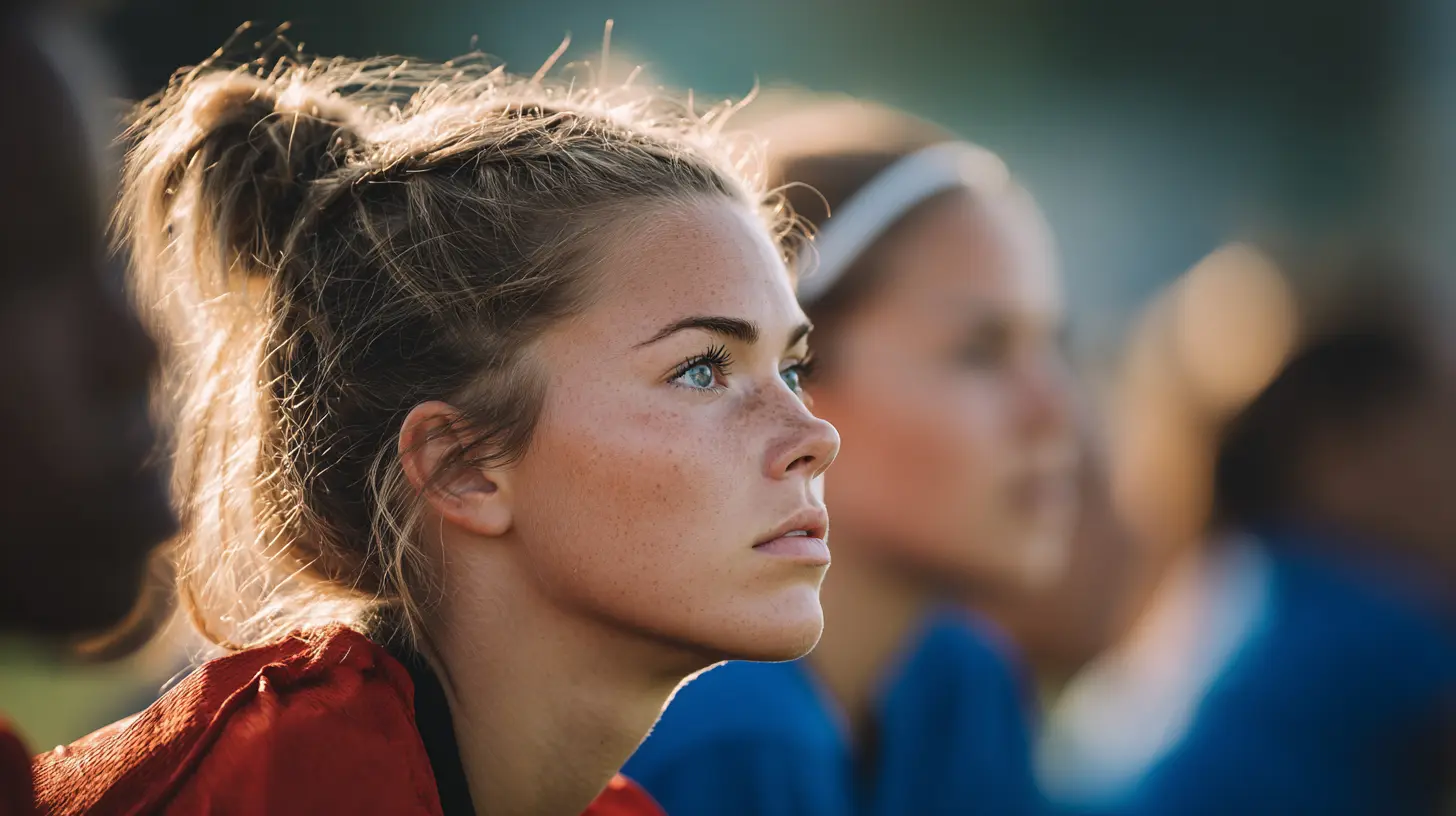
National Teams Poised to Climb
With those forces in mind, here is where the analysis points. Treat these as reasoned positions, not certainties.Brazil: The Host Advantage Meets a Real Pipeline
Brazil hosting the 2027 World Cup is the single most consequential variable in this entire forecast. Host nations routinely outperform expectations, not because of magic, but because hosting triggers a decade of accelerated investment in facilities, youth programs, and coaching. Brazil has been laying this groundwork, and the women's domestic game has been professionalizing.The nuance matters, though. Host advantage can also create pressure that crushes young squads. Brazil's rise depends on whether its federation converts hosting urgency into genuine depth rather than a marketing campaign around a few stars. If the pipeline produces two or three genuine international-level midfielders and defenders to complement the established attackers, Brazil becomes a legitimate dark horse for a deep run. If not, the home crowd could turn from asset to burden.
What to watch: the composition of Brazil's under-20 squads over the next two cycles. That is where the answer lives.
Colombia and the Broader South American Surge
Colombia has been building quietly and intelligently. Strong youth results, a growing domestic league, and players earning moves to stronger leagues abroad are all markers of a federation on the upswing. The 2027 World Cup on home continent soil amplifies this. South American teams will have familiarity with conditions, travel, and crowd dynamics that European sides may underestimate.The broader point is that South America as a region is rising faster than its historical results suggest. The common mistake analysts make is treating the region as a two-team story. That framing is outdated.
African Federations With Serious Youth Investment
Several African nations have the raw talent density to compete with anyone, and the question has always been infrastructure. Where federations have invested in full-time youth coaching, consistent international scheduling, and professional pathways for teenage players, the results are starting to show in age-group tournaments.The trade-off to understand here is between rapid senior-team results and patient pipeline building. Federations that chase immediate qualification often sacrifice youth development. The ones that will rise by 2027 are those that resisted that temptation. Watch for federations that are consistently fielding competitive under-17 and under-20 sides, because that consistency is the leading indicator.
The European Mid-Tier
Countries like Portugal, Belgium, and the Netherlands have strong club infrastructure and are increasingly treating women's soccer as a serious development priority rather than an afterthought. Their advantage is systemic: they already know how to build academies, and they are applying that knowledge to the women's game with growing conviction.The catch is competition for talent within Europe. These nations are competing against better-funded neighbors for the same players, and their domestic leagues may struggle to retain top talent. Their rise will likely be steady rather than dramatic, and it may show up more in tournament consistency than in trophies.

Clubs and Leagues: Where the Real Leverage Sits
National team forecasts get the headlines, but clubs do the developing. If you want to understand who rises internationally by 2027, look at which clubs are building the best environments for young players right now.The Academy-First Clubs
A small number of clubs have committed to academy-first models, where teenage players train in professional environments with individualized development plans, sports science support, and genuine first-team pathways. These clubs will produce a disproportionate share of the international players who break through around 2027.Why does this work? Because development is not linear, and players need consistent high-quality training hours during their most formative years. Clubs that provide those hours, and then actually give young players senior minutes, create a compounding advantage. The mistake many clubs make is hoarding young talent without a pathway, which stalls development and breeds frustration.
The Expansion Leagues
New and expanding leagues create opportunity by sheer volume. More professional roster spots mean more players get full-time training environments, which raises the overall quality pool. The trade-off is dilution: expansion can spread talent thin and lower average competitive intensity in the short term. Leagues that manage this balance well, expanding while maintaining a competitive core, will contribute more to the global talent pool by 2027.What Makes a Club a Genuine Riser
Not every club with money rises. The differentiators are usually unglamorous:- A defined playing philosophy that runs from youth to senior level
- Stability in coaching staff over multiple seasons
- Investment in medical and sports science staff
- A willingness to give young players real minutes in meaningful matches
- A clear pathway story that attracts talented teenagers
Clubs missing any of these can spend heavily and still stagnate. This is the most common failure pattern in women's soccer right now.
Players: How to Spot the Ones Who Will Break Through
Predicting individual breakouts is harder than predicting organizational trends, but there are reliable signals.The Age Curve
Players who will be 19 to 23 in 2027 are the most likely breakout cohort. They are old enough to have professional experience but young enough to still be improving rapidly. If you want to identify future stars, look at players in that age band who are already getting consistent minutes at a good level.The Minutes Signal
Talent without minutes stalls. The single best predictor of a young player's trajectory is whether she is playing meaningful senior minutes, not just training with the first team. A player getting 90 minutes weekly in a mid-tier league often develops faster than a player warming a bench at a giant club. This is a trade-off young players and their advisors face constantly, and the ones who choose playing time over prestige tend to develop better.The Versatility Factor
Coaches increasingly value players who can fill multiple roles. Young players who demonstrate tactical flexibility, whether that is a winger who can play wingback or a midfielder comfortable in a double pivot, tend to earn trust faster and get more opportunities. When scanning for future breakouts, versatility is a strong signal.What Not to Overweight
Highlight reels, youth tournament scoring records, and social media followings are weak signals. Youth tournaments reward physical maturity and individual brilliance in ways that do not always translate to senior football. The players who rise are usually the ones whose games are built on repeatable skills, decision-making, and durability.
Common Mistakes in Forecasting Women's Soccer
If you want to think clearly about 2027, avoid these traps.Extrapolating linearly from rankings. Rankings reflect past results. Structural investment reflects future results. They often diverge for two to three years before converging.
Overweighting one tournament. A single strong World Cup run can be a fluke of bracket luck and hot goalkeeping. Look for repeatable patterns across age groups and qualifying campaigns.
Ignoring the club environment. A national team is only as good as the environments its players train in week to week. Federations with players scattered across weak club situations will underperform their talent.
Assuming money solves everything. Money helps, but misallocated money, spent on marquee signings rather than infrastructure, can actually harm development by blocking pathways for young players.
Forgetting the goalkeeper and defender development lag. Attacking talent develops visibly and early. Defensive and goalkeeping talent develops later and less visibly. Teams that look stacked in attack but thin at the back often plateau. The risers by 2027 will be the ones that invested in the unglamorous positions.
Best Practices for Evaluating Risers Yourself
If you want to form your own view, here is a practical method.1. Track age-group results across two full cycles. Consistency matters more than any single result.
2. Follow the minutes. Identify which young players are getting senior minutes and in what competitive contexts.
3. Watch coaching stability. Programs that change coaches every year rarely develop players well.
4. Look at facility and staff investment announcements, but verify whether they translate into actual programs.
5. Study transfer patterns. Where are a nation's best young players going, and are they playing when they get there?
This method will not give you certainty, but it will keep you ahead of consensus, which is where the interesting analysis lives.
The Honest Caveats
Forecasting is humbling. Injuries can derail a generation. Federation politics can redirect investment overnight. A single charismatic coach can transform a program, and a single administrative failure can set one back five years. The 2027 landscape will contain surprises that no framework anticipates.What a good framework does is improve your odds of being right about the broad direction of travel. The forces described here, investment shifting to infrastructure, globalization of talent, coaching migration, and the narrowing gap between tiers, are durable. They will shape outcomes regardless of individual surprises.
Final Take
The teams and players who rise by 2027 will not be the ones with the loudest marketing. They will be the ones doing quiet, consistent, structural work today: building academies, giving teenagers real minutes, investing in sports science, and maintaining coaching stability. Brazil's host advantage makes it the most intriguing single case, but the broader story is a global widening of the competitive base. The next three years will reward patience and punish shortcuts. That is a good thing for the sport, and it makes following women's soccer more rewarding than ever.
all images in this post were generated using AI tools
Category:
Season ExpectationsAuthor:

Preston Wilkins