The Untold Story Behind League Rule Changes
1 November 2026
Let’s be honest for a second — most fans groan when they hear their favorite sports league is changing the rules… again. Whether it’s a tweak to overtime, a new foul regulation, or one of those mysterious “player safety” measures, rule changes can feel like someone’s messing with tradition. But here’s the kicker — behind nearly every rule change, there’s a spicy story, a wild incident, or just plain ol’ chaos that pushed officials to say, “Alright, that’s enough.”
So, grab your stadium snacks, because we’re diving deep into the untold, often hilarious, sometimes bizarre world behind the rules that govern the games we love. It’s not just policy—it’s drama, egos, and sometimes, a little bit of petty revenge.
Why Do Leagues Change the Rules Anyway?
Before we start spilling the tea, let’s set the stage. You might ask, “Why mess with a good thing?” Well, rule changes in sports don’t just happen because someone got bored in a boardroom.The truth? They’re usually driven by:
- Player safety concerns.
- Game integrity.
- Pace of play issues.
- Fan engagement and TV ratings.
- And sometimes… just something ultra-weird happening on the field.
In short, sports leagues are always balancing tradition with the future — and sometimes it gets messy.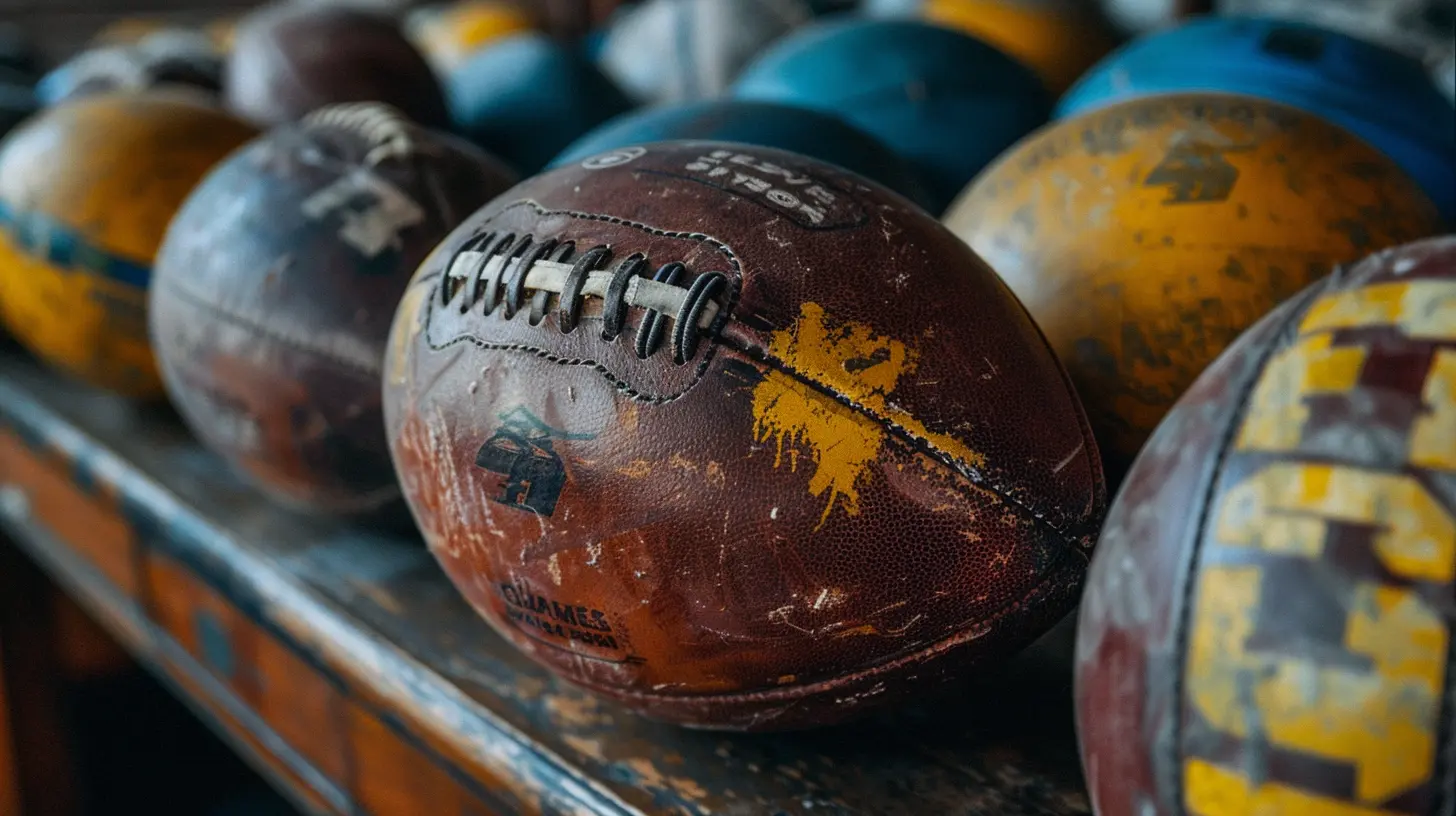
The NFL: “The Tuck Rule Game” and the Brady Effect
Ah yes, the infamous Tuck Rule. If you’ve ever wanted to see an entire fanbase lose its mind in real-time, go back and watch the 2001 AFC Divisional Playoff Game — Raiders vs. Patriots.Here’s what happened: Tom Brady dropped back to pass, got hit, the ball came loose, and the Raiders recovered. Game over, right?
Not so fast.
The rulebook had this thing called the “tuck rule,” which said if a quarterback's arm was moving forward, even slightly, while tucking the ball back in, it's an incomplete pass. After what felt like 27 hours of instant replay, the refs ruled it was an incomplete pass. Patriots kept the ball. They scored. They won. They went on to win the Super Bowl. Brady became Brady. Raiders fans aged 10 years overnight.
The backlash was so huge, the NFL scrapped the tuck rule altogether in 2013. Honestly, it might’ve been the most hated rule in football history.
NBA: Shaq, Hack-a-Shaq, and the Free Throw Revolution
Let’s talk about big men and free throws. More specifically — let’s talk about Shaquille O'Neal, a man who could break backboards but couldn’t hit a free throw to save his life.Teams began deploying a strategy called “Hack-a-Shaq,” where they’d foul Shaq on purpose every time he touched the ball — or sometimes even before he touched it — just to send him to the free-throw line where he’d brick two shots. It slowed the game to a crawl and turned NBA matchups into free throw festivals.
Fans hated it. Broadcasters hated it. Even Shaq probably hated it. So the league eventually updated the rulebook to discourage intentional fouling off the ball in the final minutes.
Thanks to Shaq, we got smoother endings—and fewer bathroom breaks during the fourth quarter.
MLB: The Time The League Said, “Please Hurry Up”
Baseball is many things: poetic, strategic, nostalgic. But at times, it can also be... excruciatingly slow. A nine-inning game could stretch longer than a Lord of the Rings movie marathon.The league finally said, “enough is enough,” and introduced a pitch clock in 2023 to speed things up. Now pitchers have a countdown—like they’re defusing a bomb instead of throwing a fastball.
But speed wasn’t the only motivation here. Youth viewership was dropping faster than a hanging curveball. The pitch clock and other pace-of-play rules were part of an effort to modernize the game and keep fans engaged.
Funny thing? Most players actually adapted faster than expected. And the games shaved off nearly 30 minutes. Who would’ve thought baseball just needed a little “hurry up”?
NHL: No More Ties, Please
If you grew up watching hockey pre-2005, you remember those soul-sucking tied games. You’d sit through 60 minutes of heart-pounding, edge-of-your-seat action… only for the game to end in a handshake and a draw. Anti-climactic much?After a 2004-05 lockout (that wiped out the entire season), the NHL came back with a bang—and shootouts.
No more ties. Now if teams are locked in a draw after overtime, they go to a shootout: one-on-one breakaways that feel more like a video game than a professional sport.
It was a controversial move, but let’s be honest — it made hockey fun again. And we all secretly love yelling “TOP SHELF!” like we’re NHL analysts every time someone scores.
The NCAA: One And Done, But Not Quite Done With Drama
College basketball has always been a stepping stone to the NBA, but in the early 2000s, it turned into a fast pass for high school stars to jump straight to the big leagues.Enter the One-and-Done Rule in 2006 — players had to be one year removed from high school before entering the NBA. The result? A college season full of future NBA stars who only stuck around campus long enough to figure out the cafeteria layout.
The rule has been one of the most debated in sports. Some say it protects young athletes. Others say it exploits them. And of course, fans just miss the days when teams stayed together for more than a hot minute.
Still, the One-and-Done craziest moment? Probably Ben Simmons famously skipping class and openly admitting he was just waiting for the draft. Honestly, same, Ben.
Soccer: VAR and the “Wait… Can I Celebrate?” Era
Who would’ve thought that giving referees instant replay would make things more confusing?Enter VAR (Video Assistant Referee). Rolled out in major soccer leagues around the world starting in the 2010s, VAR was supposed to fix missed calls, offside goals, and all those handballs no one could agree on.
Instead, it launched a new phenomenon: players scoring, celebrating, then awkwardly waiting to see if the goal stood or not. It’s like throwing a birthday party and waiting to see if anyone RSVPs.
VAR came because of countless controversial goals, but no rule change stirred more emotions. Some fans love it. Others claim it’s ruining the beautiful game. Either way, it’s here to stay — and it’s changing the way we watch and react.
The Funny Side of Rule Changes: When Things Just Got Weird
Alright, not all rule changes are born from drama. Some? Flat-out comedy.NFL: No More Cell Phone Celebrations
In 2003, Joe Horn of the Saints scored a touchdown, reached under the goalpost padding, pulled out a hidden cell phone, and pantomimed a call. It was equal parts genius and absurd.The NFL was not amused. They cracked down on touchdown celebrations faster than your grandma hung up on spam calls.
But here’s the twist: in 2017, they reversed course and encouraged creative celebrations again. Why? Because fans missed them. The lesson? Sometimes you gotta let the players dance and dial.
NBA: The Dress Code Debacle
In 2005, the NBA introduced a dress code. Why? Well, after years of players showing up to press conferences wearing oversized jeans and bling-heavy chains, Commissioner David Stern felt the league needed a more “professional” look.Players were not thrilled.
Allen Iverson famously said, “They’re targeting us.” Many believed the rule indirectly criticized hip-hop culture.
The result? A new generation of players who turned the rule on its head — showing up in tailored suits and high-fashion looks that would make Paris designers blush. What started as a crackdown led to a fashion revolution. NBA players became the most stylish athletes on the planet. Take that, Milan.
The Constant Evolution of the Game
The sports world doesn’t sit still — it sprints, slides, dunks, and dives. And as it does, the rules evolve alongside it. Sometimes it’s to fix a broken system. Sometimes it’s to spice things up. And sometimes, it’s because of a single moment so wild, it forces everyone to take a long, hard look and ask, “Wait… should we allow that?”These stories behind rule changes aren’t just footnotes in a dusty manual. They’re the heart-pounding, jaw-dropping, tear-your-jersey moments that remind us — sports are alive. They grow. They shift. Just like the fans watching.
So next time you see a new rule pop up and your first instinct is to say, “Oh come on, seriously?” — pause for a second. There’s probably a wild backstory waiting to be told… and chances are, it’s a good one.
Final Whistle Thoughts
Sports aren't just about who wins or loses — they're about the moments in between. The chaos. The controversy. The creativity. Rules are just the framework, but the way they change tells the story of where the game has been… and where it’s going.So let’s raise a foam finger to every bizarre goal, every game-winning call, and every touchdown that led to a rewrite. The rulebook may be black and white, but the stories behind those changes? Pure technicolor.
all images in this post were generated using AI tools
Category:
Sports LeaguesAuthor:

Preston Wilkins