The Evolution of Team Tactics Over the Decades
8 February 2026
If you’ve ever watched an old football (soccer) match and thought, “Wait, what are these guys doing?” — you’re not alone. Team tactics in sports (whether football, basketball, or even American football) have changed dramatically over the years. It's like comparing a vintage typewriter to a modern laptop — both get the job done, but one does it faster, smarter, and with way more flair.
In this deep dive, we’re breaking down how team tactics have evolved over the decades: the good, the bad, and the absolutely brilliant. So buckle up, sports fans — it’s going to be a tactical time travel ride!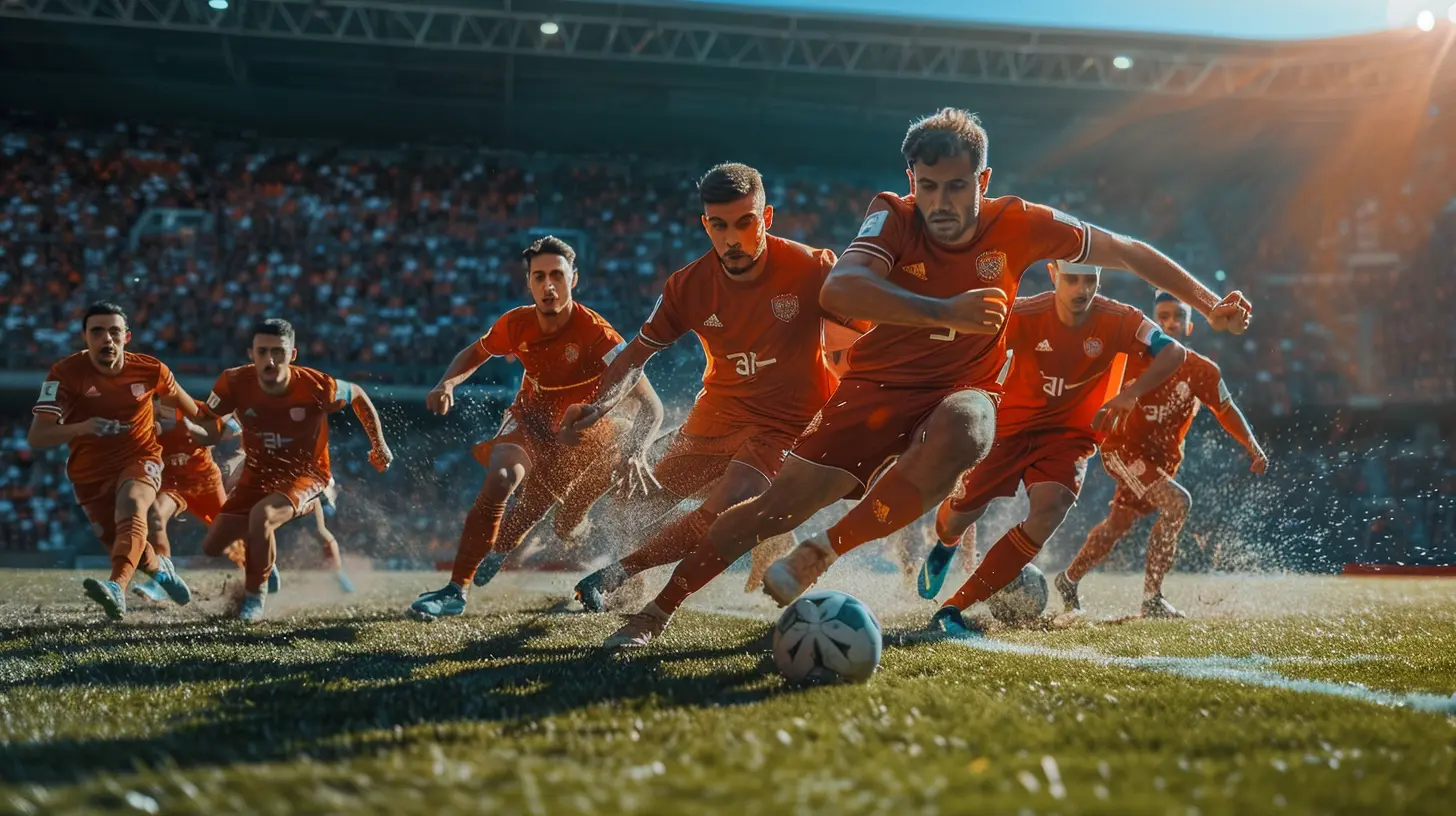
Table of Contents
1. The Tactical Roots: The Birth of Team Strategy2. The 1950s & 60s – Structure Comes into Play
3. The 70s – Creativity and Flair Take Center Stage
4. The 80s & 90s – The Rise of Discipline and Pressing
5. The 2000s – Possession and Precision
6. 2010s – High Press & Inverted Roles
7. 2020s and Beyond – Data, Versatility, and Fluidity
8. How Tactics Shape the Game Today
9. Why Understanding Tactics Makes You a Better Fan
10. Final Thoughts – The Never-Ending Chess Match

The Tactical Roots: The Birth of Team Strategy
Back in the early days of sports – think the 1800s and early 1900s – tactics were... well, let’s just say they were basic. Most teams just fielded their best players and hoped for the best. It was like playing chess but using only pawns.Take early football. The classic "2-3-5" formation had defenders, midfielders, and five attackers running wild. It wasn’t about shape or structure; it was more about grit, hustle, and moments of brilliance. Defense? Optional.
But even then, the seeds of tactical thinking were being planted. Coaches began to realize that where you position your players, and how they move as a unit, mattered – a lot.
The 1950s & 60s – Structure Comes into Play
Welcome to the era when tactics started to grow up.In the 1950s, teams like Hungary introduced more strategic formations. The Mighty Magyars played a version of the 4-2-4 that blew minds. Suddenly, players weren’t just sticking to their positions — they were rotating, interchanging, and confusing defenses.
Then came the Italians with "catenaccio" – the infamous defensive system focused on keeping things tight at the back. It wasn’t the prettiest style, but boy, was it effective. Think of it as parking the bus… and adding a brick wall for good measure.
Tactics in this era were all about balance — knowing when to attack and when to sit back. Risk management, baby.
The 70s – Creativity and Flair Take Center Stage
Now we’re talking!The 1970s were like a breath of fresh air. Teams weren’t just organized — they were expressive.
Enter: Total Football. This Dutch invention (thanks, Johan Cruyff!) was a tactical revolution. In Total Football, any outfield player could take over the role of any other player in the team. Imagine everyone being able to play everywhere… like musical chairs, but on steroids.
It was beautiful chaos. And it showed that tactics didn’t have to be rigid. They could be fluid, adaptable, and even artistic.
Other sports followed suit. In basketball, teams started experimenting with transition offense and spacing. Coaches like Red Auerbach built dynasties based on smart movement and team cohesion.
The 80s & 90s – The Rise of Discipline and Pressing
If the ‘70s were a creative art show, the ‘80s and ‘90s brought a dose of reality. This was the time of discipline, structure, and — yep — pressing.Arrigo Sacchi's AC Milan changed the game with a high-pressing, zonal marking system. Players didn’t just chase the ball — they controlled space. It was a chess game with cleats.
High defensive lines, compact shapes, and collective pressing became the norm. Possession still mattered, but pressing was the new king. Think of it as the early internet: everything became faster, more connected, and with less time to stand around scratching your head.
In American football, the West Coast offense changed how quarterbacks threw the ball — quick, short passes with precision, emphasizing control over chaos.
Tactics were no longer just about formation. It was about philosophy.
The 2000s – Possession and Precision
Ah, the era of tiki-taka — short passes, constant movement, and keeping the ball like it was the team’s firstborn child.Spain and Barcelona, under Pep Guardiola, made this style famous. They didn’t just pass for fun; every movement had a purpose. It was patience, control, and psychological warfare rolled into one.
Formations like 4-3-3 and 4-2-3-1 became more popular, emphasizing balance between attack and defense. The midfield became the tactical battleground, with players like Xavi and Pirlo pulling the strings.
Other sports weren’t left behind. Basketball saw the emergence of the “stretch four” and the start of the three-point revolution. Teams realized spacing and shot efficiency could win games on their own.
It was the age of thinkers, strategists, and control freaks.
2010s – High Press & Inverted Roles
The 2010s were like the tactical buffet — a little bit of everything.We saw the rise of the gegenpressing (counter-pressing) popularized by Klopp’s teams. Lose the ball? Win it back instantly. No time for sulking — just sprint and suffocate.
At the same time, roles became less defined. Fullbacks didn’t just defend — they bombed forward like wingers. Some midfielders became “false nines,” and suddenly, your striker was passing more than shooting.
Everyone was doing everything. Tactical flexibility was no longer a luxury — it was essential.
Analytics also started making an impact. Coaches (and fans) had access to heat maps, xG (expected goals), and all kinds of nerdy goodness. The game was becoming smarter, faster, and more unpredictable.
2020s and Beyond – Data, Versatility, and Fluidity
Now we’re in the era of data-driven tactics. It’s no longer just about what you see; it’s also about what the numbers say.Managers use performance data to tweak formations, monitor fatigue, and even plan substitutions. Players wear GPS trackers. Teams use drones in training. It’s basically tactics meets sci-fi.
You’ve got inverted fullbacks (yes, again!), false 9s, and now even false 6s. What’s next? False goalkeepers?
Teams play hybrid systems — a 4-3-3 when attacking, morphing into a 3-2-5 in possession. Madness? Maybe. Brilliant? Absolutely.
The best part? The tactical evolution isn’t slowing down. It's an arms race of ideas, and every coach is looking for the next edge.
How Tactics Shape the Game Today
Ever noticed how modern matches feel like they're happening at 2x speed? That’s the tactical shift in action.Tactics not only determine how teams play — they shape the entire flow of the game. Teams that press high force opponents to play faster. Teams that sit deep turn games into patience tests.
And because everyone has access to footage, data, and analysis, no one’s safe. Get caught out tactically, and you’ll be exposed faster than a TikTok trend going viral.
Why Understanding Tactics Makes You a Better Fan
You don’t need to be a coach to appreciate tactics. In fact, once you start noticing shifts in formation or a clever pressing trigger, watching games becomes way more fun.Think of it like watching a movie with behind-the-scenes access. You start to see the “why” behind the “what.” And that makes you appreciate the brilliance behind even a 0-0 draw.
So next time someone says, “That game was boring,” hit them with, “Actually, the way they transitioned from a low block to a 3-4-3 was genius.” Boom. Tactical mic drop.
Final Thoughts – The Never-Ending Chess Match
Here’s the thing: tactics will keep evolving. What’s trendy today will be retro tomorrow. The game is a living, breathing organism — always learning, always adapting.From basic formations to data-driven wizardry, tactics have come a long way. And as long as there are coaches trying to outsmart each other, the evolution will never stop.
So next time you watch your favorite team, look beyond the goals. Watch the movement, the positioning, the structure. There's a whole battle happening beneath the surface — and understanding it makes the game even better.
Stay curious. Stay tactical. And enjoy the ride.
all images in this post were generated using AI tools
Category:
Team SportsAuthor:

Preston Wilkins
Discussion
rate this article
2 comments
Raleigh Anderson
The evolution of team tactics reflects the dynamic nature of sport, with strategies adapting to advancements in technology, player conditioning, and game analysis. Understanding these changes is crucial for appreciating the complexity and depth of modern athletic competition.
March 10, 2026 at 2:00 PM
Preston Wilkins
Thank you for your insightful comment! Indeed, the evolution of team tactics illustrates the intricate relationship between technology, player development, and strategic innovation in sports. It's fascinating to see how these elements shape modern competition.
Thaddeus Roberts
Fascinating insights! Tactics truly shape how teams evolve and adapt over time.
February 9, 2026 at 5:24 AM
Preston Wilkins
Thank you! I'm glad you found the insights intriguing. Tactics indeed play a crucial role in a team's growth and adaptability.