Rule Overhaul: Are the New Changes in Soccer Fair?
28 May 2026
Soccer, or football as it’s known to most of the world, is more than just a sport—it's a way of life. For millions of fans, players, and coaches, the beautiful game represents tradition, community, and passion. But what happens when the rules we’ve all come to know and love start to shift?
In recent years, soccer has witnessed some significant rule changes, and, as with any major overhaul, there are mixed feelings. Some embrace the updates as necessary improvements to modernize the game, while others feel these changes are tampering with traditions that should remain untouched. Are these new rules fair? Or is the essence of the game being lost?
Let’s dive into some of these changes and explore whether they are making the game better—or worse.
The Introduction of VAR (Video Assistant Referee)
Let’s start with one of the most controversial additions to soccer in recent years—VAR. It was introduced with the aim of reducing human error and ensuring more accuracy in crucial decisions like goals, penalties, and red cards. Sounds like a great idea, right? After all, who doesn’t want a fairer game?But here’s the thing: while VAR may have the best intentions, its implementation has been rocky. We’ve all seen it—those moments where the game grinds to a halt as officials review footage from every possible angle, drawing lines on the screen to determine if a player’s toenail was offside. It can feel like the excitement of the game is being sucked away by technology.
Now, don’t get me wrong—accuracy is important. But has VAR gone too far? Many fans and players argue that soccer’s charm lies in its flow, its spontaneity. Stopping the game for lengthy reviews disrupts the rhythm and can even shift the momentum. Not to mention, the technology isn’t perfect; we’ve seen instances where even with VAR, decisions remain subjective.
So, is VAR fair? Yes, in theory, but its application still needs some fine-tuning. Soccer is a game of passion, and while technology can help, it shouldn’t be the star of the show.

Handball Rule: A Never-Ending Debate
Ah, the handball rule, a topic that has sparked countless debates in pubs, living rooms, and sports studios worldwide. The International Football Association Board (IFAB) has tweaked the handball rule multiple times in recent years, and to be honest, it feels like we’re still no closer to clarity.The current rule states that a handball is an offense if a player touches the ball with their hand or arm when it is deemed to be in an “unnatural position.” But what does that even mean? What’s natural to one player may not be natural to another, especially in the heat of the moment when you're defending a set piece or trying to block a shot.
It’s like trying to thread a needle while running full speed—a near-impossible task. The lack of consistency in how referees interpret the rule has left fans scratching their heads. One week, a player is penalized for a handball, and the next, a seemingly identical incident is waved off.
In a game where inches and split-second decisions matter, is it fair to expect players to control every movement of their arms? Probably not. It seems like the rule needs another rethink.

Offside Rule: Are We Too Precise?
The offside rule has been part of soccer for as long as anyone can remember. It’s meant to prevent “goal-hanging” and encourage teamwork. But with the introduction of VAR, the rule has become a source of frustration for many fans.We’ve all seen it: a player scores a brilliant goal, the crowd goes wild, and then… the dreaded VAR check. After what feels like an eternity, the goal is disallowed because the player’s armpit was fractionally ahead of the last defender. It’s a buzzkill.
Yes, rules are rules, and offside is offside. But has technology made us too obsessed with precision? Soccer is a fast-paced game, and these marginal decisions—sometimes by mere millimeters—feel overly harsh. There’s something cruel about stripping away a goal for the tiniest of infractions, especially when the player had no intent to gain an unfair advantage.
Wouldn’t it make more sense to give attackers the benefit of the doubt? After all, goals are what fans come to see, and disallowing them for such minor infractions feels like we’re missing the forest for the trees.

Substitution Rules: Game-Changer or Time-Waster?
In response to the global pandemic, soccer temporarily allowed five substitutions per game instead of the usual three. The idea was to prevent player fatigue, given the condensed schedules many teams were facing. But now that things are returning to normal, some leagues have decided to make the five-sub rule permanent.On the surface, this seems like a positive change. More subs mean more fresh legs, which can reduce injuries and improve the quality of play late in games. Plus, it gives managers more tactical flexibility and allows more players to get game time.
However, there’s a flip side. Some argue that the five-sub rule benefits bigger teams with deeper squads. Clubs with more resources can rotate their star players more effectively, while smaller teams may struggle to match that level of depth. In a way, it could widen the gap between the “haves” and the “have-nots.”
And let’s not forget the potential for time-wasting. Teams leading by a goal might use their substitutions to disrupt the flow of the game, dragging out the clock in the final minutes. While there are limits on when subs can be made, it’s still something that could be exploited.
So, is it fair? It depends on who you ask. For some, it’s a welcome tactical tool. For others, it’s just another way to stack the odds in favor of the elite.
Changes to Goalkeeper Rules
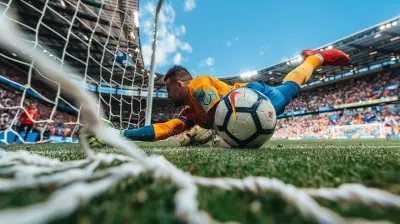
Goalkeepers have always had a unique role in soccer, with their own set of rules. But recent changes, especially around penalty kicks, have sparked some heated debates. For example, goalkeepers are now required to have at least one foot on the goal line when a penalty is taken. If they move off the line before the kick, it can result in a retake.On the surface, this seems like a fair adjustment to prevent keepers from gaining an unfair advantage. But here’s the kicker (pun intended): goalkeepers already face tremendous pressure during penalties. Forcing them to stay glued to the line feels overly harsh, especially when you consider that strikers can take their time, stutter-step, and even fake their kicks.
Being a goalkeeper during a penalty is like standing in the middle of traffic, trying to dodge cars. You need every advantage you can get, and this new rule seems to take away one of the few tools keepers have.
Is it fair? Goalkeepers would probably say no. Strikers, on the other hand, might argue that it levels the playing field. But from a neutral perspective, it feels like the rule could use some tweaking.
Timekeeping: Stoppage Time vs. Real Time
One of the most fascinating and unique aspects of soccer is the concept of stoppage time. Rather than stopping the clock every time the ball goes out of play, the referee adds a few minutes at the end of each half to account for injuries, substitutions, and time-wasting.But in recent years, there’s been talk of moving towards a more “real-time” approach, similar to what we see in sports like basketball or American football. The clock would stop whenever the ball is out of play, ensuring that the game lasts exactly 90 minutes.
On the one hand, this would eliminate debates about whether stoppage time was too short or too long. It would add clarity and ensure that fans get the full 90 minutes of action they expect.
On the other hand, it could disrupt the flow of the game. Soccer is unique in its continuous nature, and stopping the clock every few seconds might make it feel more like a series of set plays rather than a fluid contest. Plus, let’s be honest—those dramatic, last-minute goals during stoppage time are part of what makes soccer so exhilarating.
Is it fair? It depends on what you value more—precision or spectacle.
Conclusion: Balancing Tradition and Progress
At the end of the day, soccer is evolving. The game we love is constantly changing, and while some of these new rules may feel jarring, they’re part of an ongoing effort to make the sport more fair, engaging, and modern. But it’s a delicate balance.While technology like VAR and stricter rules on handball and offside are designed to reduce errors, they also risk taking away some of the human element that makes soccer so thrilling. Likewise, changes to substitutions and timekeeping are intended to improve the game, but they can also create unintended consequences.
So, are the new changes in soccer fair? It’s complicated. Some are undoubtedly improvements, but others may need more refinement. What’s clear is that soccer will continue to evolve, and as fans, it’s up to us to decide whether we embrace these changes—or fight to preserve the traditions that made the beautiful game what it is.
all images in this post were generated using AI tools
Category:
New RulesAuthor:

Preston Wilkins
Discussion
rate this article
1 comments
Finley Turner
The recent rule changes in soccer aim to enhance fairness and game flow. However, the impact on traditional strategies and player roles raises valid concerns. It remains to be seen how these adjustments will be accepted by players and fans alike.
June 1, 2026 at 4:03 AM
Preston Wilkins
You're right; the balance between fairness and tradition is delicate. It'll be interesting to see how players and fans adapt to these changes.