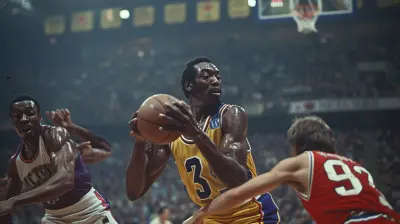
Revolutionizing the Court: How Basketball’s New Rules Are Shifting Strategy
8 March 2026
Basketball has always been a fast-paced, dynamic game, but in recent years, we’ve seen the sport undergo some major transformations. And no, I’m not just talking about the rise of three-point shooting or the insane athleticism of today’s players. I’m talking about the rule changes that have come into play. The NBA, FIBA, and even NCAA have introduced new rules that are not only changing how teams approach the game but also how coaches strategize, how players train, and ultimately, how fans experience the sport.
So, what are these new rules, and how are they shifting the landscape of basketball? Let’s dive in and take a closer look.
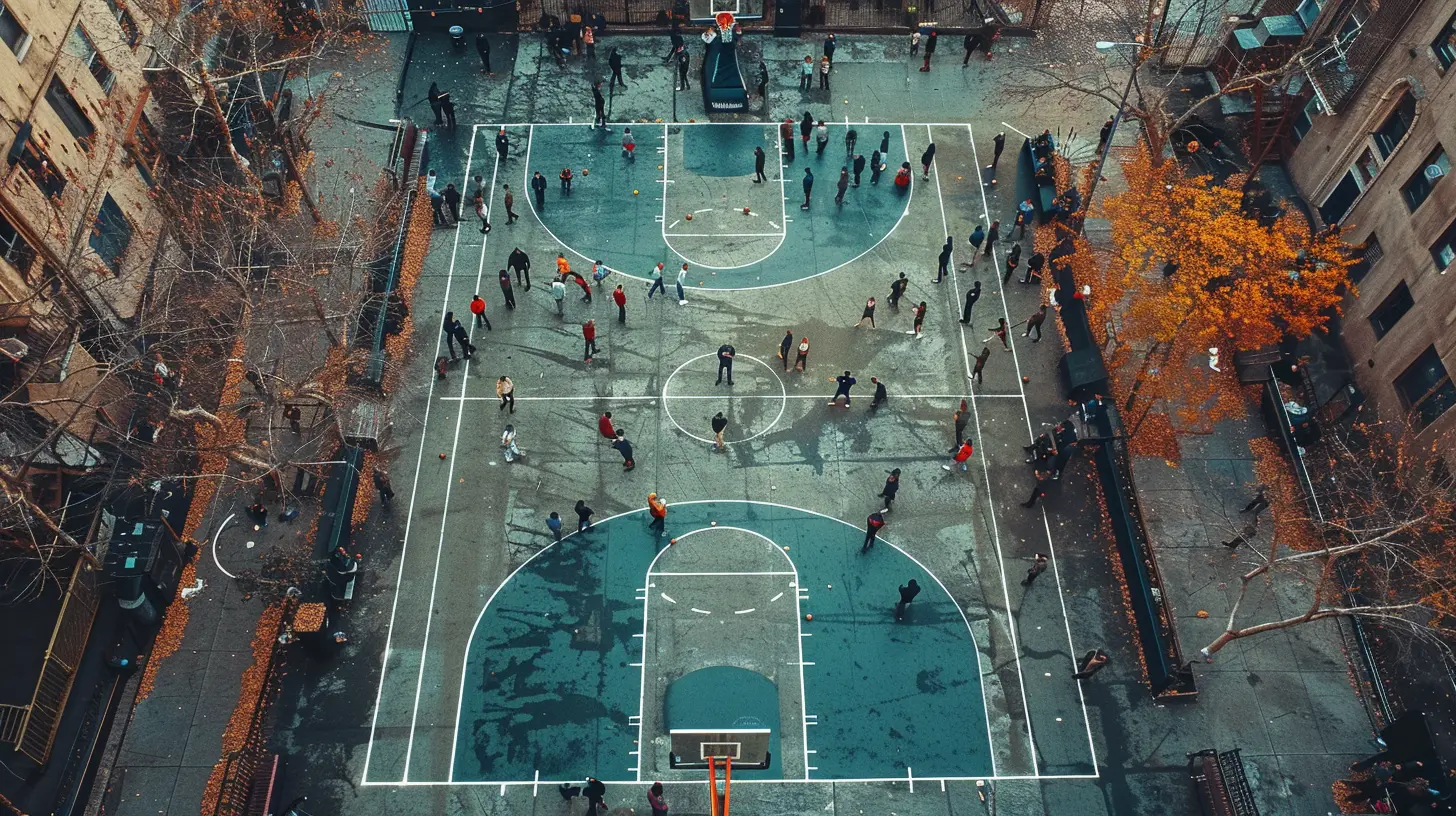
The Evolution of Basketball Rules
Basketball has been around for over a century, and like any major sport, it’s had to evolve. The game's original 13 rules, penned by Dr. James Naismith in 1891, would seem almost unrecognizable to modern players and fans. Over the years, new rules have been introduced to address everything from pace of play to player safety and even to make the game more exciting for fans.Remember the introduction of the shot clock in the 1950s? It was a game-changer—literally. Before the shot clock, teams would sometimes hold the ball for minutes at a time, killing the flow of the game. The shot clock forced teams to be more aggressive, to push the pace, and to create more scoring opportunities. And it worked.
Fast forward to today, and we’re seeing another wave of rule changes that are having a similar impact on the game. But instead of just speeding up the tempo, these new rules are affecting everything from player movement to how fouls are called. Let’s break it down.
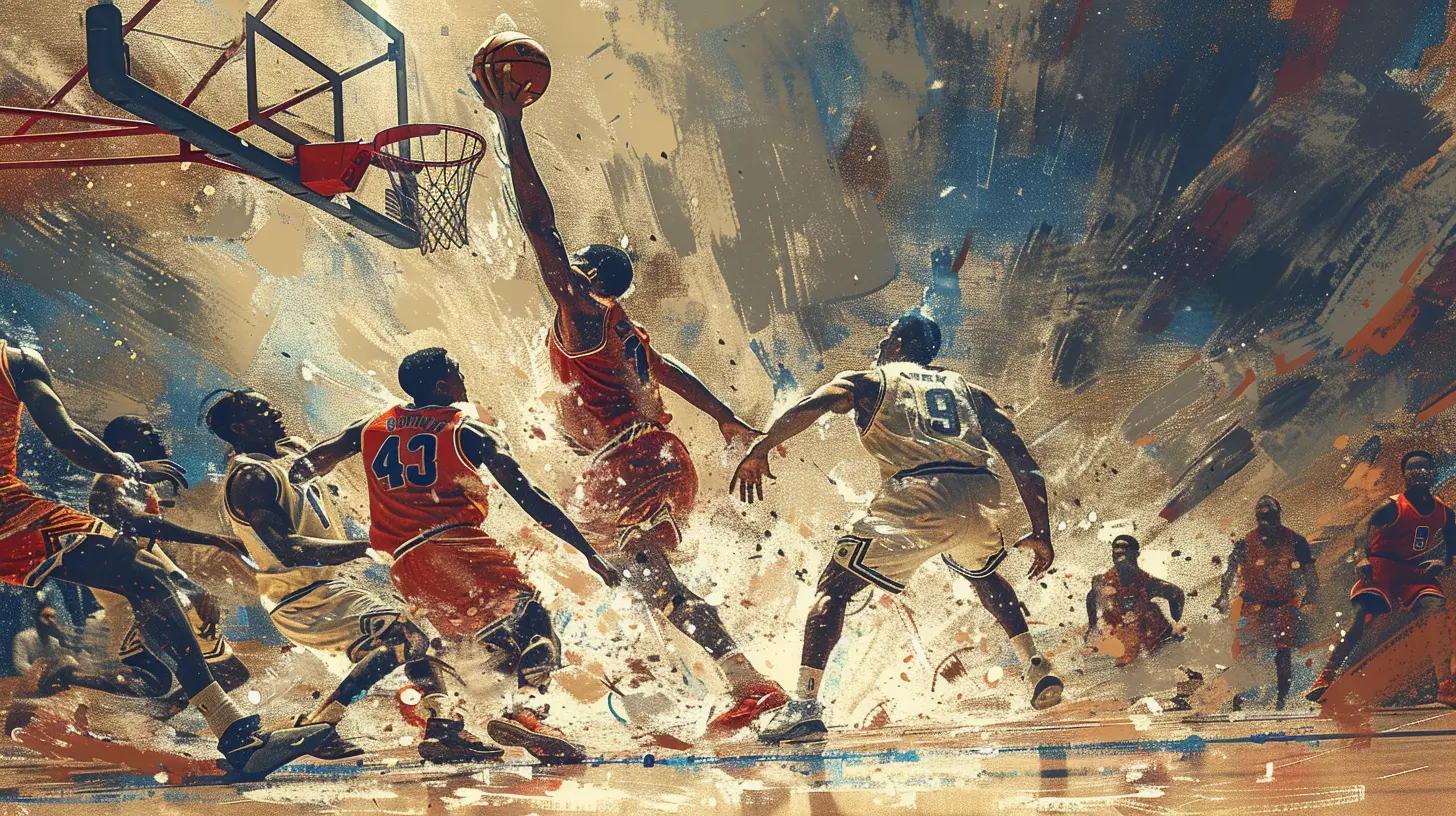
The New Rules and Their Impact
1. Freedom of Movement Rule
One of the most significant changes in recent years has been the enforcement of the “freedom of movement” rule. This rule is designed to crack down on the physicality that often slows down offensive players. In the past, defenders could get away with clutching, grabbing, and bumping players as they tried to cut or move without the ball. This made it harder for offensive players to get open and limited the fluidity of ball movement.Now, referees are much more stringent about calling fouls when defenders impede a player’s movement. The result? A much more free-flowing game with lots of movement and passing. Teams that rely on ball movement (think Golden State Warriors) have benefitted the most, as their players can now cut and screen without being manhandled.
This rule change has forced teams to rethink their defensive strategies. Gone are the days when you could simply muscle up on your opponent. Instead, teams are focusing more on positioning, anticipation, and help defense to stop high-powered offenses.
2. The 14-Second Offensive Rebound Rule
Another rule that’s had a significant impact on the game is the 14-second reset after an offensive rebound. Previously, when a team grabbed an offensive board, the shot clock would reset to 24 seconds, giving them plenty of time to reset their offense and work for a good shot. But now, the clock only resets to 14 seconds.This change was made to speed up the game and increase the number of possessions, and boy, has it worked. Teams are now forced to move quicker after grabbing an offensive rebound. They don’t have the luxury of holding the ball and resetting; instead, they need to get right back into their offense and look for immediate scoring opportunities.
Coaches have had to adjust their strategies to account for this change. You’ll often see teams taking quicker shots after offensive rebounds, and in some cases, they’ll prioritize getting back on defense rather than crashing the boards. The shortened shot clock has also led to more fast-break opportunities, as teams look to capitalize on the increased tempo.
3. The Elam Ending in the NBA All-Star Game
The NBA All-Star Game has long been criticized for being a glorified pickup game, with little to no defense and even less intensity. But in 2020, the league introduced a new rule to spice things up—the Elam Ending. Instead of playing a traditional fourth quarter, the game clock is turned off, and a target score is set. The first team to reach that score wins.While the Elam Ending is currently only used in the All-Star Game (and in The Basketball Tournament, a summer event), its impact is undeniable. The rule has created a more intense, competitive atmosphere, as teams know they need to lock in defensively and execute offensively to win. Plus, it eliminates the endless parade of fouls and free throws that often mars the end of close games.
Could we see the Elam Ending make its way to regular-season games? It’s unlikely, but the rule change has sparked conversations about how basketball can continue to evolve to keep fans engaged.
4. Transition Take Foul Rule
One of the most frustrating plays for basketball fans is the intentional “take foul” during a fast break. For years, defenders would stop a fast break by deliberately fouling the ball handler before they could get to the rim. It was a smart tactical move, but it killed the excitement of one of the most electrifying plays in the game—the fast break.To address this, the NBA introduced a new rule for the 2022-2023 season: the transition take foul now results in one free throw and possession for the team on offense. The goal is to discourage teams from using the take foul to stop fast breaks and instead let the play develop naturally.
This rule has had an immediate impact. We’re seeing more fast breaks being completed, leading to more highlight-reel dunks and exciting plays. Teams are also being more cautious about when and how they foul, knowing that the penalty for a take foul is now much stiffer.
5. Expanded Use of Instant Replay
Like many professional sports leagues, the NBA has embraced technology to assist with officiating. In recent years, the league has expanded its use of instant replay to review more types of plays, including out-of-bounds calls, goaltending, and certain types of fouls.While the expanded use of replay has its critics—some argue it slows down the game—it’s hard to deny that it’s had a significant impact on strategy. Coaches now have to carefully consider when to use their challenge, knowing that it could swing the momentum of a game. Players, too, are more mindful of their actions, knowing that even the slightest misstep could be caught on replay.
6. The G-League's One Free Throw Rule
The NBA’s developmental league, the G-League, is often used as a testing ground for potential rule changes, and one of the most intriguing experiments in recent years has been the “one free throw” rule. Under this rule, players only shoot one free throw to account for all possible points. For example, if a player is fouled on a two-point shot, they shoot one free throw worth two points. If they’re fouled on a three-point shot, they shoot one free throw worth three points.The goal of this rule is to speed up the game by reducing the number of free throws. While it hasn’t been implemented in the NBA yet, it’s possible that we could see it adopted in the future. If that happens, it would dramatically change how teams approach fouling, free throw shooting, and late-game situations.

Strategic Adjustments by Coaches and Teams
With all these rule changes, it’s no surprise that coaches are being forced to adapt their strategies. Today’s game is more about spacing, speed, and skill than ever before. Teams like the Golden State Warriors and Houston Rockets have thrived in this new era by emphasizing three-point shooting, ball movement, and transition play.On defense, teams are moving away from physical, man-to-man defense and instead focusing on switching, rotations, and help-side defense. The days of planting a big man in the paint and daring opponents to drive are long gone. Now, teams need versatile defenders who can guard multiple positions and quickly rotate to cover open shooters.
Even player development has changed. Young players are being trained to shoot from deep, handle the ball, and make quick decisions, rather than relying solely on athleticism or post-up skills. The “positionless basketball” era is here, and the new rules are only accelerating its arrival.

The Fan Experience: More Action, Less Stoppage
For fans, the new rules have made the game more exciting. There’s less standing around, fewer stoppages, and more action. The emphasis on freedom of movement and fast breaks has led to more scoring, while the expanded use of technology ensures that the game is called as fairly as possible.Even casual fans can appreciate the impact of these rule changes. After all, who doesn’t love a good fast break or a buzzer-beating shot?
Conclusion: The Game is Always Evolving
Basketball is constantly evolving, and the recent rule changes are proof of that. Whether it’s speeding up the game with a 14-second shot clock reset or encouraging more fast breaks by penalizing take fouls, the new rules are pushing the game in exciting new directions. Teams are adjusting their strategies, players are refining their skills, and fans are being treated to a more dynamic, fast-paced version of the sport they love.Will we see even more rule changes in the future? Absolutely. The game of basketball is always evolving, and that’s part of what makes it so thrilling to watch.
all images in this post were generated using AI tools
Category:
New RulesAuthor:

Preston Wilkins
Discussion
rate this article
2 comments
Dana Duke
This article offers valuable insights into how recent rule changes in basketball are reshaping team strategies and player dynamics. The emphasis on faster gameplay and increased shooting opportunities highlights the evolving nature of the sport. It’s fascinating to see how teams adapt to these innovations for competitive advantage.
April 3, 2026 at 10:50 AM
Preston Wilkins
Thanks for your thoughtful comment! I appreciate your insights on how these changes are influencing the game. It's exciting to see teams innovate and adapt.
Seraphis Banks
This article brilliantly highlights how recent rule changes in basketball are transforming strategic play. By emphasizing faster pace and encouraging three-point shooting, teams must now adapt quickly to stay competitive. It’ll be fascinating to see how coaches innovate in response to these evolving dynamics on the court.
March 12, 2026 at 5:26 AM
Preston Wilkins
Thank you for your insightful comment! It's exciting to witness how these rule changes are reshaping the game and inspiring innovative coaching strategies.