Eyes on the Finish Line: Real-Time Marathon Commentary in 2027
8 October 2026
By 2027, watching a marathon will feel less like staring at a river of runners and more like sitting inside a race strategist's head. The best broadcasts will know where every contender is, what pace they are holding, how their heart rate is responding, and which one is about to crack. The commentary will not just describe what happened. It will explain what is about to happen and why.
That shift is already underway. Timing mats, GPS pods, wearable sensors, drone cameras, and AI driven graphics are converging into a single production pipeline. The question for broadcasters, race organizers, coaches, and fans is no longer whether real-time marathon commentary will become richer. It is how to build it without drowning viewers in noise, and how to keep the human story at the center of a data heavy show.
This article looks at what real-time marathon commentary will realistically look like in 2027, what technology will make it possible, where it will fail, and how the people producing it should think about the trade-offs.
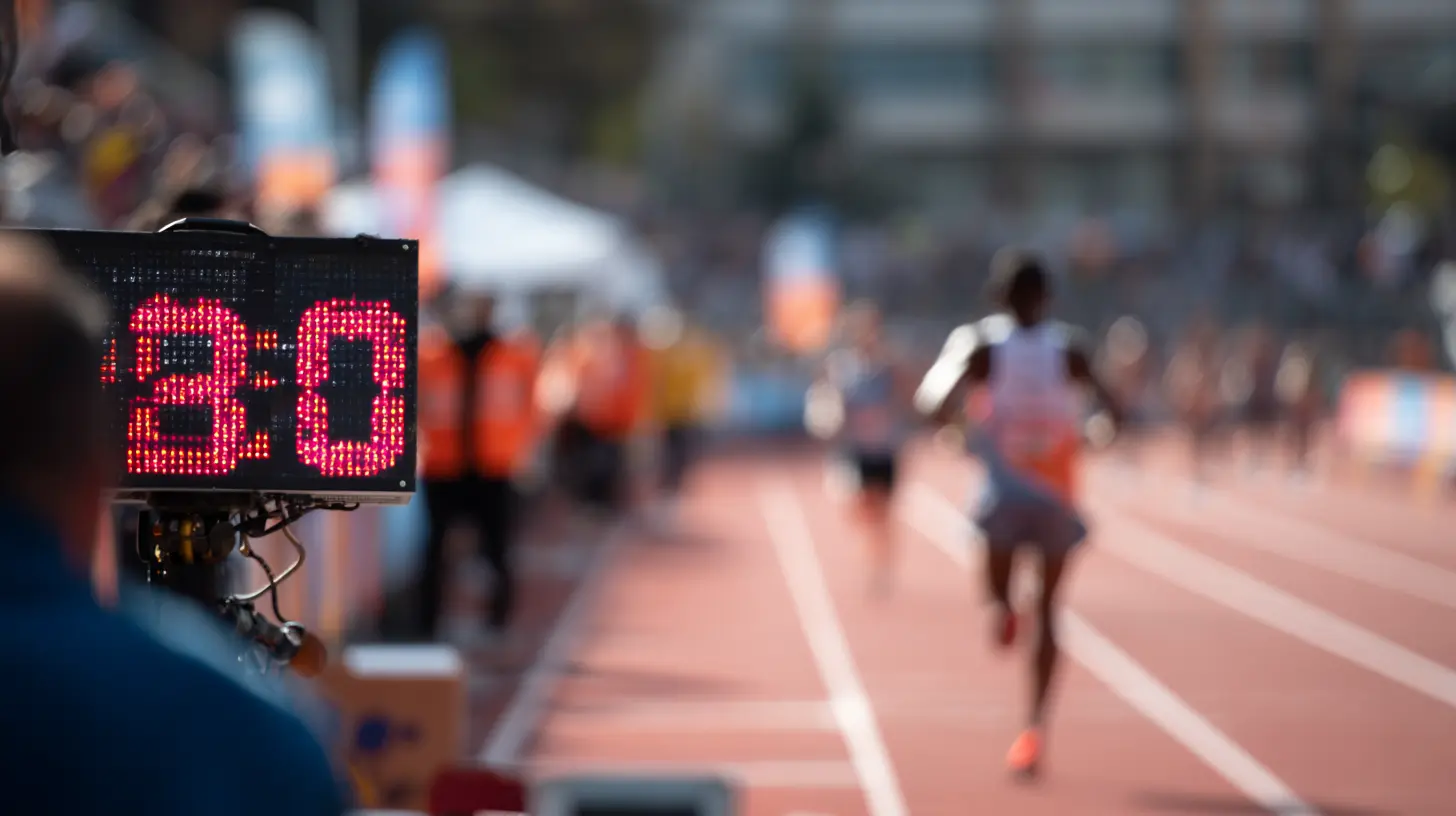
What "Real-Time" Actually Means in a Marathon
Real-time is a slippery word. In a 100 meter final, real-time means milliseconds. In a marathon, a few seconds of delay is invisible to almost everyone. The more useful definition is decision relevant latency: the gap between something happening on the course and the commentary team being able to explain it accurately.For a marathon, that gap should be under about five seconds for position and pace data, and under a minute for deeper physiological insight. Anything slower and the commentator is narrating history. Anything faster and you risk showing noise as if it were signal.
There are three layers of real-time information in a marathon:
1. Position and pace. Where is each runner, and how fast are they moving right now?
2. Condition and effort. How hard is the body working, and is that sustainable?
3. Context and narrative. What does this moment mean for the race, the record, the athlete's career, and the tactics unfolding?
Most current broadcasts do the first layer well, the second layer poorly, and the third layer through human instinct alone. The 2027 version will do all three, but not automatically. Each layer needs different tools and different editorial judgment.
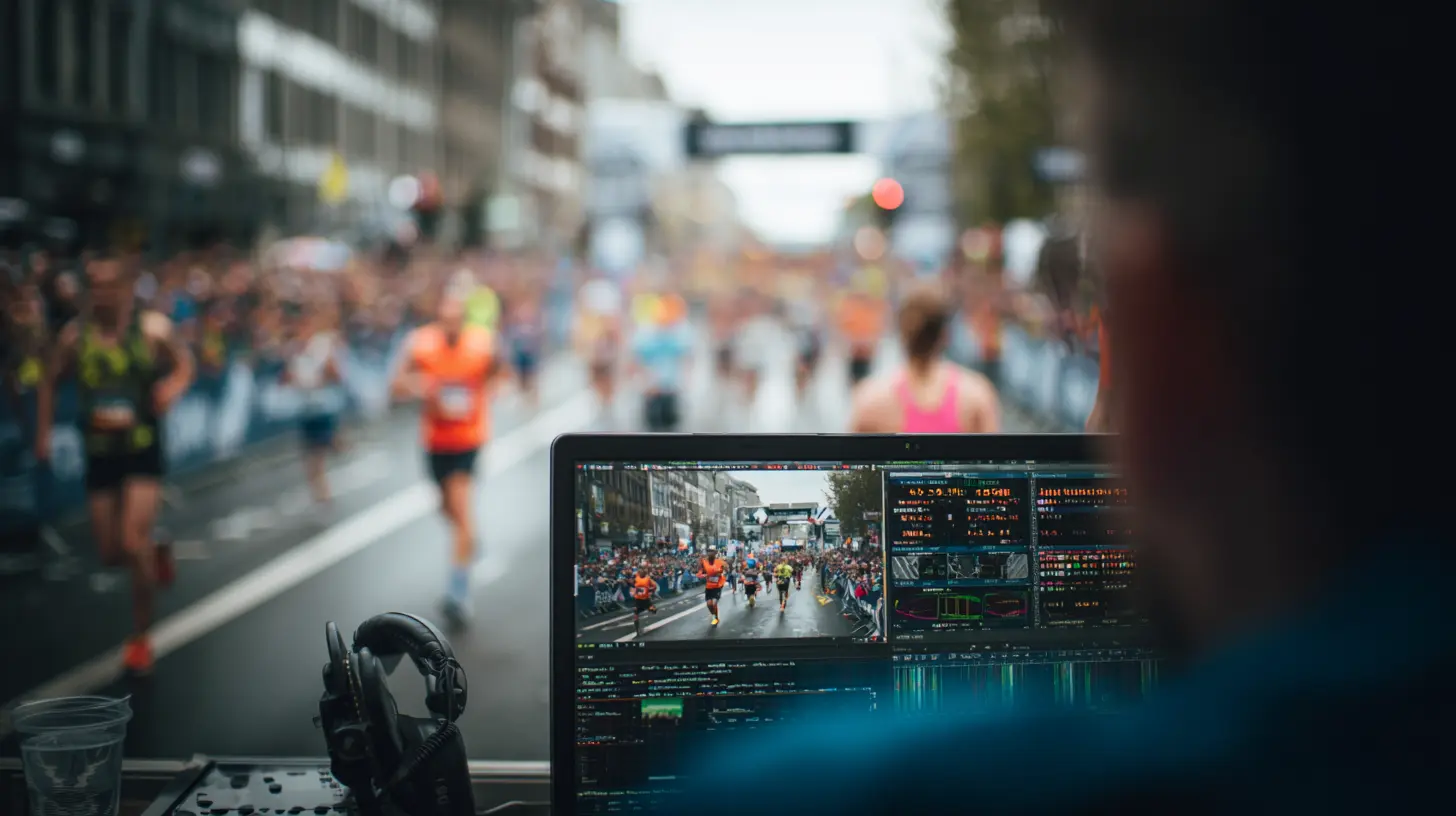
The Technology Stack Behind the 2027 Broadcast
Timing mats are not enough anymore
Traditional chip timing gives you a precise split every 5 kilometers. That is excellent for accuracy and terrible for drama. Between mats, a runner can surge, fade, or drop out, and the broadcast has no idea until the next checkpoint.The 2027 standard will be a hybrid: chip timing for official results, plus continuous tracking for the broadcast. That continuous layer will come from a mix of GPS, ultra wideband anchors, and inertial sensors. Each has trade-offs.
GPS works almost anywhere but struggles in dense city canyons, under bridges, and in tunnels. Ultra wideband gives centimeter level accuracy but requires fixed infrastructure along the course, which is expensive and logistically heavy. Inertial sensors, which track movement without external signals, drift over time and need regular correction.
The practical answer is sensor fusion: combine all three, weight them by reliability, and correct drift with timing mats. This is not exotic technology. It is the same principle used in phones and cars. The hard part is doing it live, for hundreds of athletes, with a production team that needs the data in a usable format within seconds.
Wearables and the ethics of the heartbeat
Once you can track position, the next question is effort. Heart rate, core temperature, and running power are all measurable with wearable devices. Some elite athletes already race with them. In 2027, more will, but not all, and not always willingly.This creates a genuine tension. Heart rate data can make commentary far more insightful. A commentator can say, "His heart rate has been above threshold for twelve minutes, and his pace is dropping. That is a warning sign." That is compelling and useful. But it also exposes an athlete's physical struggle in a way that can feel invasive, and it can be gamed. An athlete who knows the data is public might deliberately hide a weakness or push into a dangerous zone to avoid looking vulnerable.
There is no single right answer here. Some races will mandate data sharing for all elite entrants. Others will make it optional. Broadcasters should be transparent about what is being shown and why, and they should give athletes a clear way to opt out of physiological data without losing screen time. Trust is a long term asset. A single scandal over misused biometric data could set the whole field back years.
Computer vision and the camera that never blinks
Fixed cameras and drones will do more than capture pretty shots. Computer vision will identify runners, track their form, and detect changes that a human eye might miss. A slight drop in cadence, a shortening of stride, a tilt of the head. These are the early signs of fatigue, and they are exactly what a great commentator looks for.The advantage of computer vision is consistency. It never gets tired, never misses a frame, and can monitor dozens of runners at once. The disadvantage is interpretation. A camera can see a runner's stride shorten. It cannot know whether that is fatigue, a tactical adjustment, or a shoe issue. That judgment still belongs to the human analyst.
The best 2027 broadcasts will use computer vision as a prompt, not a conclusion. The system flags a change. The commentator decides whether it matters.

How Commentary Itself Will Change
From description to prediction
Today, most marathon commentary describes what viewers can already see. "He is leading." "She is closing the gap." In 2027, the value will shift toward prediction and explanation. Why is this move significant? What does the data suggest will happen next? What are the tactical options?This is a higher bar. It requires commentators who understand physiology, pacing strategy, and race dynamics, not just running. It also requires production teams to feed them the right information at the right moment, without overwhelming them.
A practical model is a three tier commentary structure:
- The play by play voice handles the immediate action and keeps the narrative moving.
- The analyst interprets data, form, and tactics.
- The data producer feeds context and flags emerging stories in real time.
This is similar to how Formula 1 and cycling broadcasts operate. Marathon has been slower to adopt it because the action is spread over a much larger area and a much longer time. Real-time tracking removes that excuse.
The risk of data overload
The biggest mistake in data driven commentary is assuming more information is better. It is not. Viewers can absorb roughly one new idea every twenty to thirty seconds before they stop retaining anything. A broadcast that constantly flashes pace, heart rate, cadence, and projected finish time becomes wallpaper.The fix is editorial discipline. Choose one or two data points per segment and explain them properly. A single well explained split is worth more than ten numbers on screen. The best directors will treat data like dialogue: used sparingly, timed well, and always in service of the story.
Silence is still a tool
One of the most underrated skills in marathon commentary is knowing when to say nothing. The sound of feet on pavement, the crowd, the breathing, the moment before a move. Real-time data makes it tempting to fill every gap with analysis. The 2027 broadcasts that stand out will be the ones that resist that temptation and let the race breathe.
What This Means for Different Audiences
The casual fan
The casual viewer wants a clear story and a reason to care. Real-time data can help by making the invisible visible. A projected finish time that creeps toward a national record is dramatic. A heart rate spike that explains a sudden slowdown is clarifying. But casual fans do not need cadence graphs. They need one or two vivid, well explained insights per segment.The serious runner
The serious runner wants depth. They want to know split strategy, fueling, shoe choices, and how the leaders are managing effort. This audience will happily watch a second stream with more data and less polish. In 2027, expect dual broadcasts: a clean main feed for general audiences and a data rich feed for enthusiasts. This is already common in esports and is a natural fit for endurance sports.The coach and the analyst
Coaches will use real-time data to study tactics in ways that were previously impossible. They will see how a surge affects the pack, how recovery happens, and how pacing decisions play out over two hours. This is a genuine analytical advance, but it comes with a caution. Live data is noisy. Conclusions drawn in the moment should be treated as hypotheses, not facts. Post race analysis, with cleaned and verified data, will remain the gold standard.Common Mistakes and Misconceptions
Mistake one: treating GPS as ground truth
GPS is a measurement, not reality. It drifts, especially in cities. A broadcast that reports GPS pace as exact will eventually embarrass itself. Always cross check with timing mats and smooth the data before it goes on screen.Mistake two: assuming all athletes want to be tracked
Some will, some will not. Privacy and competitive concerns are real. Build opt out mechanisms and respect them. A race that pressures athletes into full data sharing will eventually face a backlash.Mistake three: letting the graphics drive the story
Graphics should support the narrative, not replace it. If the director is cutting to a new data panel every fifteen seconds, the viewer is watching a dashboard, not a race.Mistake four: ignoring latency in the production chain
It is easy to forget that data has to travel from a sensor to a server to a graphics system to a screen. Each step adds delay. If the total delay is thirty seconds, the commentator will be describing something the viewer saw half a minute ago. Map the entire pipeline and measure it end to end.Misconception: AI will replace commentators
AI will not replace good commentators in 2027. It will replace bad ones. The tasks AI handles well are repetitive and data driven: tracking splits, flagging anomalies, generating basic graphics. The tasks it handles poorly are exactly the ones that matter most: judgment, empathy, storytelling, and knowing when to shut up.
Best Practices for Building a 2027 Broadcast
1. Start with the story, then add data. Decide what the viewer needs to understand, then choose the data that supports it.2. Invest in sensor fusion, not a single technology. No single tracking method is reliable enough on its own.
3. Build a data producer role. Someone must sit between the technology and the commentary team and translate.
4. Set a latency budget. Define acceptable delay for each data type and design the pipeline to meet it.
5. Give athletes control over physiological data. Transparency and consent protect everyone.
6. Test in smaller races first. A regional marathon is a better laboratory than a major, because the stakes are lower and the feedback is faster.
7. Train commentators on the tools. A great voice with bad data literacy will misread the race. A great analyst with no storytelling instinct will bore the audience.
8. Plan for failure. Sensors drop out. Networks fail. Have a fallback mode that keeps the broadcast coherent without live data.
The Trade-Offs Nobody Talks About
Every advance in real-time commentary comes with a cost. More data means more production staff, more bandwidth, and more failure points. Better tracking means more infrastructure on the course, which can conflict with the race itself. More insight means more pressure on athletes, who may feel watched in ways they did not sign up for.There is also a subtler trade-off: the more we know in the moment, the less room there is for mystery. Part of what makes a marathon compelling is the uncertainty. If the data says a runner is certain to fade, and they do, the drama is diminished. If the data says they will fade and they do not, the data looks foolish. Broadcasters need to hold their predictions loosely and let the race surprise them.
The best 2027 broadcasts will use technology to deepen the story, not to close it off. They will treat data as a way to ask better questions, not as a way to provide final answers.
What to Watch For Next
The pieces are already moving. Wearable companies are pushing deeper into elite sport. Timing companies are building continuous tracking products. Broadcasters are experimenting with AI driven graphics. The races that lead in 2027 will be the ones that treat this as a production and editorial challenge, not just a technology purchase.For race organizers, the practical step is to start collecting continuous data now, even if you are not broadcasting it yet. For broadcasters, the step is to build the data producer role and test it in low stakes events. For coaches and athletes, the step is to decide what data you are willing to share and under what conditions.
The finish line in 2027 will still be a line on the ground. But everything leading up to it will be visible in ways it never was before. The question is whether we use that visibility to tell better stories, or just to show more numbers. The answer is not decided by the technology. It is decided by the people holding the microphones.
all images in this post were generated using AI tools
Category:
Live CommentaryAuthor:

Preston Wilkins