Could the 2027 NFL Season Bring a New MVP Front-Runner?
15 October 2026
The NFL MVP race has become one of the most predictable award conversations in sports, and that predictability is exactly why the 2027 season deserves a closer look. For most of the past decade, the award has rotated among a small group of quarterbacks who combine elite efficiency with team success. Patrick Mahomes, Josh Allen, Lamar Jackson, Joe Burrow, and a handful of others have dominated the discussion. But every era of NFL football eventually produces a shift in who gets taken seriously as a candidate, and there are structural reasons to believe the 2027 season could be the moment when that shift becomes obvious.
This is not a prediction piece built on hype. It is an analysis of the forces that create MVP front-runners in the first place, why those forces are quietly changing, and which players and situations are positioned to take advantage. If you want to understand who might own the MVP conversation in 2027, you have to understand how the conversation actually works.
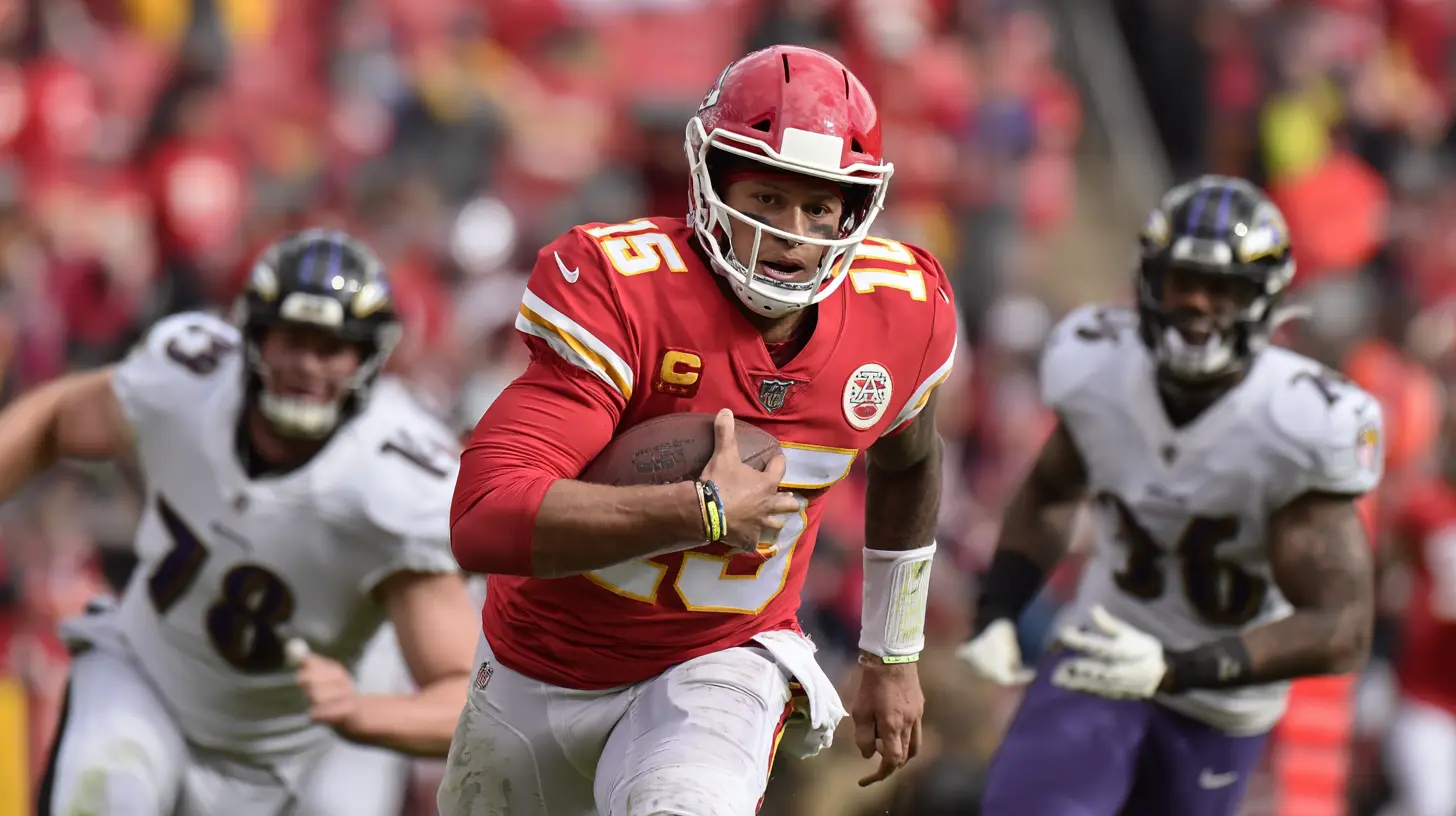
How the NFL MVP Award Really Gets Decided
Before naming candidates, it helps to strip away the mythology. The MVP award is not simply given to the best player. It is given to the player who best fits a set of unwritten criteria that voters apply, sometimes consciously and sometimes not.The Four Pillars of MVP Voting
In practice, four factors drive almost every MVP result.First, quarterback play dominates. A non-quarterback has won the award only a handful of times in the modern era, and the last running back to win it was Adrian Peterson in 2012. That is not a knock on other positions. It reflects how voters value the position that touches the ball on nearly every offensive snap.
Second, team success matters enormously. A quarterback on a team that misses the playoffs almost never wins. The award is tied to winning in a way that pure statistics are not. This is why a slightly less efficient quarterback on a 13-win team often beats a more efficient quarterback on a 9-win team.
Third, narrative and timing carry weight. A late-season surge, a signature prime-time performance, or a compelling personal story can tilt a close race. Voters are human, and the award is partly a storytelling exercise.
Fourth, durability and availability matter. Missing three or four games can end a candidacy even if the per-game numbers are spectacular. The MVP almost always plays at least 16 games in a 17-game season.
Understanding these four pillars explains why the same names keep appearing. They also explain why a new front-runner can emerge quickly when circumstances align.
Why the Current Era Feels Stuck
The current MVP landscape is concentrated because the league has a small number of quarterbacks who simultaneously check every box: elite talent, stable coaching, strong supporting cast, and consistent team success. Mahomes has the system and the résumé. Allen has the physical tools and the volume. Jackson has the dual-threat profile and the efficiency. Burrow has the accuracy and the weapons.That concentration is not permanent. It depends on roster construction, coaching stability, salary cap pressure, and the developmental curve of younger players. All of those variables are in motion right now, and the effects tend to show up two or three years later. That timeline points directly at 2027.
The Structural Forces Shaping the 2027 Race
To project a new MVP front-runner, you have to look at the conditions that produce one, not just the players themselves. Several of those conditions are shifting at the same time.Salary Cap Pressure and Roster Rebalancing
When a quarterback signs a massive extension, the team's ability to surround him with elite talent changes. This is not a controversial claim. It is basic cap math. Teams that pay top-of-market money to a quarterback often have to let productive receivers, offensive linemen, or defensive starters walk. The result is a narrower margin for error.By 2027, several current contenders will be living with the consequences of recent mega-contracts. That does not mean those quarterbacks will fall off. It means their supporting casts may look different, and their team success may become less automatic. When that happens, the door opens for a quarterback on a rookie contract or a team-friendly deal to post similar numbers with a better overall roster.
This is one of the most reliable patterns in the modern NFL. The best value in football is a good quarterback on a cheap contract, because it lets a team spend elsewhere. The 2027 season could be the year when that value translates into an MVP trophy.
Coaching Turnover and Offensive Innovation
Offensive schemes evolve in cycles. The Shanahan-style wide zone system, the spread concepts that came from college, and the motion-heavy pre-snap looks that dominate today were all once considered novel. By 2027, defenses will have had years to adjust to the current meta. The next wave of offensive innovation will likely favor a different archetype of quarterback.Historically, schematic shifts have created MVP winners. The rise of the West Coast offense elevated precision passers. The read-option era elevated dual-threat quarterbacks. The current era rewards quarterbacks who can operate in structure and create off-script. If a new system emerges that maximizes a specific skill set, the quarterback who best fits it could jump to the front of the line.
This is not speculation about a specific coach. It is a recognition that the league rewards whichever team solves the current defensive puzzle first. The 2027 season is a reasonable window for that solution to become visible.
The Developmental Curve of Young Quarterbacks
Quarterbacks typically need two to three years of starting experience before they reach their peak efficiency. The 2022 and 2023 draft classes are therefore at a critical stage. By 2027, those players will be in years four through six, which is often the sweet spot for MVP-level production.Consider the pattern. Lamar Jackson won his first MVP in his second season as a starter. Patrick Mahomes won in his first full season as a starter. Josh Allen broke through in his third year. The leap from promising to dominant often happens suddenly, and it usually happens in that window. The 2027 season lines up with that window for several young passers.
Candidate Profiles: Who Could Break Through
Rather than naming a single favorite, it is more useful to describe the profiles that tend to produce a new MVP front-runner. You can then match those profiles to the league's current trajectory.The Ascending Young Starter
This is the most common path. A quarterback drafted in the early 2020s, now in his fourth or fifth season, has already shown flashes of elite play. His team has built around him through the draft. He has a coordinator who trusts him. The only missing piece is consistency and a healthy roster.The appeal of this profile is obvious. He is cheap relative to his production, which means his team can afford a strong defense and a deep skill group. If he takes a modest step forward, his team could win 12 or 13 games, and his stats could land in the top five. That combination is usually enough to win MVP.
The risk is that the step forward never comes. Many young quarterbacks plateau. Some are held back by poor offensive line play or a coaching change. The difference between a breakout and a disappointment is often situational rather than talent-based.
The Veteran on a Rebuilt Roster
A second path runs through a veteran who has already been good but never quite won the award. Think of a quarterback who has made Pro Bowls and won playoff games but has been overshadowed by a more decorated peer. If his team reloads through the draft and free agency while his division weakens, he could post career-best numbers on a top seed.This profile works because voters reward players who have paid their dues. There is a natural inclination to give the award to someone who has been close before. A veteran with a strong narrative and a 13-win team is a dangerous candidate.
The trade-off is that veterans on expensive contracts often have thinner rosters. If the supporting cast is not genuinely improved, the team success may not follow, and the candidacy stalls.
The System Quarterback Who Finally Gets Weapons
Every few years, a quarterback who has been labeled a product of his system gets an upgraded supporting cast and silences the criticism. The label itself becomes part of the narrative. If he produces at a high level and his team wins, voters enjoy the redemption arc.This profile depends heavily on front office execution. A single elite receiver or a rebuilt offensive line can change everything. The 2027 season could be the payoff year for a team that has been drafting and developing for exactly this window.
The Dual-Threat Wildcard
Running quarterbacks have a built-in advantage in MVP voting because their rushing production adds a dimension that pure passers cannot match. Lamar Jackson's 2019 season is the clearest modern example. A dual-threat quarterback who throws for 3,500 yards and runs for 900 more creates a statistical profile that is hard to ignore.The catch is durability. Running quarterbacks take more hits, and the MVP almost always plays a full season. The candidates who manage their rushing volume while keeping the threat alive tend to last longer. By 2027, the next generation of dual-threat passers will have had time to refine that balance.
What Could Go Wrong With This Projection
Any projection about a season two years away deserves skepticism. Several factors could preserve the status quo or produce a completely different outcome.The Incumbents Might Not Go Anywhere
The simplest counterargument is that the current front-runners are still in their primes. Mahomes, Allen, Jackson, and Burrow are all young enough to be elite in 2027. If their teams remain healthy and their supporting casts hold up, the award could stay in the same small circle. Great players often stay great longer than expected, and the league has seen dominant runs last a decade or more.Injuries and Coaching Changes Are Unpredictable
MVP races are frequently decided by events no one can forecast. A torn ACL in October, a midseason trade, or a coordinator leaving for a head coaching job can reshape the conversation overnight. Projecting a new front-runner requires assuming a relatively stable environment, which is never guaranteed.Voter Behavior Can Be Sticky
Voters sometimes default to familiar names when the race is close. A young player has to be clearly better, not just marginally better, to unseat an established star. That inertia is real and should be factored into any prediction.How to Evaluate MVP Candidates Yourself
If you want to think about the 2027 race like an analyst rather than a fan, focus on process over highlights. Here is a practical framework.Track Team Trajectory, Not Just Talent
A quarterback's MVP case is built on wins. Look at how a team is constructing its roster. Is the offensive line improving? Is the defense young and ascending? Is the schedule manageable? A talented quarterback on a team trending toward 12 wins is a far better bet than a more talented quarterback on a team stuck at 8 wins.Watch Efficiency Metrics in Context
Raw passing yards can mislead. Efficiency metrics like yards per attempt, completion percentage over expected, and passer rating under pressure tell a more complete story. But context matters. A quarterback with a great line will look more efficient than one under constant duress. Compare players within similar situations before drawing conclusions.Monitor Offensive Line and Skill Position Investments
The fastest way to predict a quarterback leap is to look at what his team does in the draft and free agency. If a team spends premium picks on receivers and blockers, that is a signal. If it spends those picks on defense, the quarterback may be asked to do more with less, which usually caps his MVP ceiling.Consider the Narrative Arc
Voters are storytellers. A quarterback returning from injury, a team ending a long playoff drought, or a player finally getting his first real shot all create narrative momentum. These stories do not win awards by themselves, but they break ties. Pay attention to them.
Common Mistakes When Predicting MVP Races
Most bad predictions share the same flaws. Avoiding them will make your analysis sharper.The first mistake is overvaluing raw stats. Passing yards and touchdowns matter, but they are not the whole story. Turnovers, situational play, and team results carry more weight than most fans realize.
The second mistake is ignoring roster context. A quarterback cannot win MVP if his defense gives up 30 points a game or his line cannot protect him. Team construction is not a side issue. It is central to the award.
The third mistake is assuming last year's breakout will continue automatically. Progress is rarely linear. Some players regress, some plateau, and some are derailed by injuries or scheme changes.
The fourth mistake is dismissing the incumbents too quickly. The current stars are still stars. A new front-runner has to earn the spot, not just inherit it.
What the 2027 Season Could Actually Look Like
Pulling these threads together, a plausible 2027 scenario looks like this. Several veteran quarterbacks are still playing at a high level, but their teams have been forced to make difficult cap decisions. A few young passers have matured into efficient, high-volume starters on rosters built through the draft. One of them leads a team to a top seed, posts a touchdown-to-interception ratio near 4-to-1, and adds enough rushing production to separate himself from the pack.The award does not go to the most physically gifted player. It goes to the quarterback who best combines production, efficiency, and winning. That combination is available to more players than the current conversation suggests.
None of this guarantees a new front-runner. The incumbents could hold the line. A rookie could arrive and change everything. But the conditions for a shift are building, and 2027 is a reasonable timeline for them to converge.
Final Thoughts
The NFL MVP award is not a random event. It follows patterns, and those patterns are shaped by roster economics, coaching, development curves, and voter psychology. The 2027 season sits at the intersection of several of those forces. Young quarterbacks will be entering their prime. Cap pressure will be reshaping contenders. Offensive schemes will be evolving. Any one of those factors could produce a new front-runner. Together, they make it likely that the conversation will look different than it does today.The smart approach is not to pick a name now. It is to watch the underlying signals: roster investment, coaching stability, efficiency trends, and team trajectory. The next MVP front-runner is already in the league. The question is whether the 2027 season is when the rest of us finally see it.
all images in this post were generated using AI tools
Category:
Season ExpectationsAuthor:

Preston Wilkins